Taking the Long View on Alaska’s Public Lands: Q&A with AVF’s Director of Strategic Partnerships
Alaska’s public lands define the state—ecologically, culturally and economically. Nearly 90% of Alaska is public land, spanning forests, tundra, rivers and coastlines that support subsistence, sustain wildlife and store vast amounts of carbon. Decisions about how these lands are managed shape not only Alaska’s future, but also its role in a changing climate.
At Alaska Venture Fund (AVF), our public lands work grows directly from our longstanding place-based investment approach and a core belief: that the people closest to these landscapes should help shape how they are stewarded. As pressures on Alaska’s public lands intensify, this work is rapidly expanding and evolving to meet the moment.
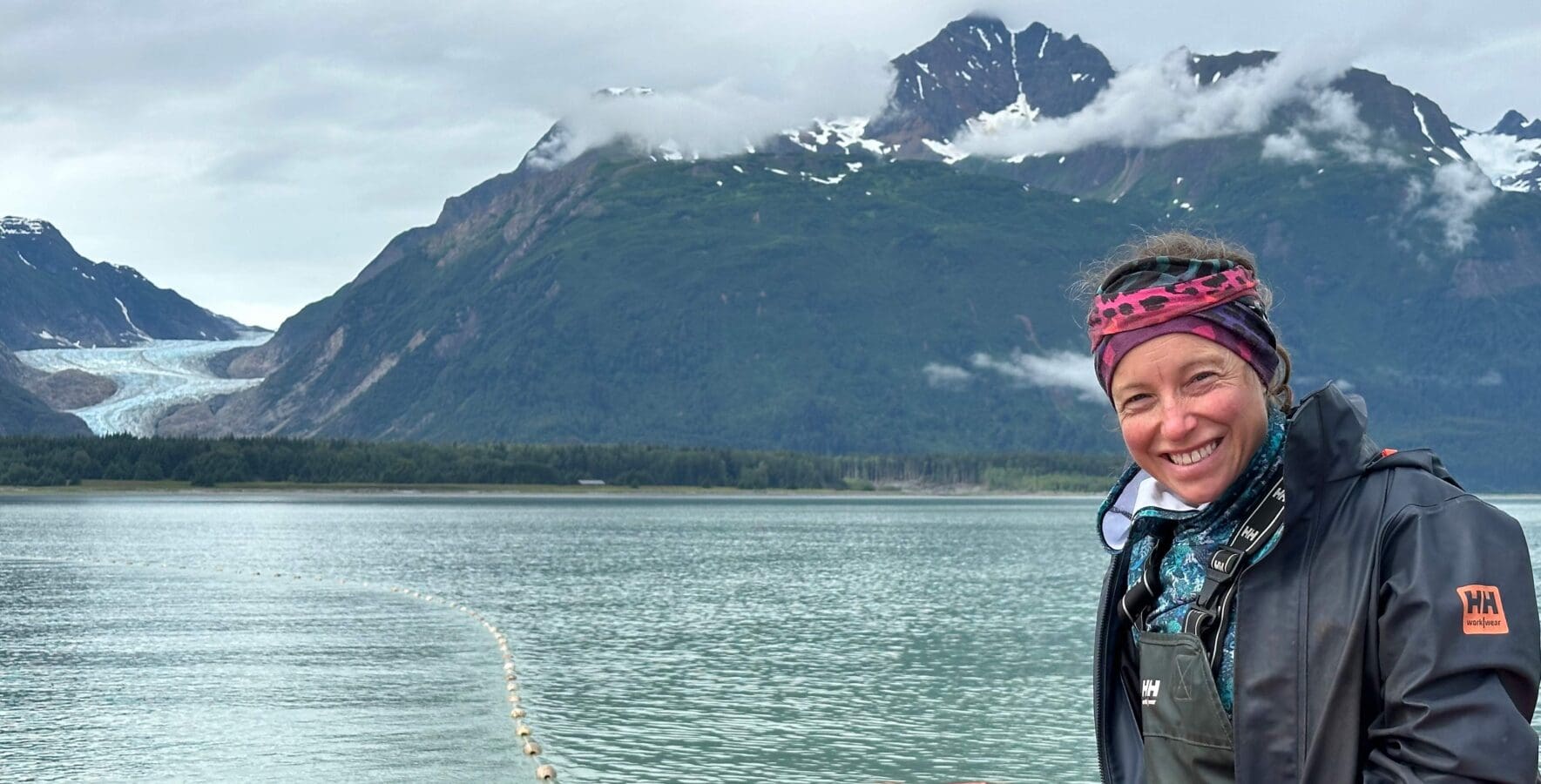
Natalie Dawson, AVF’s Director of Strategic Partnerships, brings more than 25 years of experience across biology, conservation and public policy to this work. Based in Haines, she works closely with Tribal governments, local partners and statewide coalitions to connect on-the-ground experience with the systems that govern Alaska’s lands.
This interview has been edited for length and clarity.
Your career ranges from biology to public policy. What connects those experiences for you and how does that shape your work today?
For me, the work has to be grounded in lived experience. I wouldn’t have been able to move into public policy without first living and working in the places and communities affected by those decisions.
Early in my career, I worked as a biologist on remote islands in Southeast Alaska’s Tongass National Forest, studying weasels that depend on intact old growth forests. I spent years returning to the same places, trying to understand how human activity affects wildlife. One year I would be conducting research in an old growth forest, and the next year I would come back to find it clear cut. We would share our research with forest managers, and yet it wasn’t being incorporated into policy decisions. That was a turning point for me. I saw how much of a gap can exist between the lived, on-the-ground experience of being in a place and the policy decisions shaping those landscapes.
My work now sits in that gap, helping connect lived experience, science and community knowledge with the decisions being made about these places.
How does Alaska Venture Fund work in that space between community experience and the decisions being made about these places?
Alaska Venture Fund invests in people in their communities. I live in the Chilkat Valley, a region of Alaska where state and federal lands and waters, subsistence fisheries and proposed development projects all intersect. Being rooted here allows me to build the kind of trust that makes real collaboration possible. Instead of an outside organization coming into a community and saying, “This is what we will do for you,” AVF gives me the time and space to form meaningful local relationships so we can start from a different question entirely: “What do we need, and how should we address it?”
That trust is the foundation for everything else. It is what allows us to move into genuinely creative territory to try approaches that haven’t been tried before. It’s not unlike investigating things in research and science – you shouldn’t get too attached to your original question. You go out, you observe and learn, and from that you build the questions worth asking. Our questions at AVF come from that community interaction, that community trust.
Because we are rooted in community, and also engaged at the state and federal policy level, we can take what we learn on the ground and translate it into bigger scalable solutions. We can also share those learnings across our network, so that what one community figures out, another doesn’t have to discover alone. That’s how we are able to support change at scale.
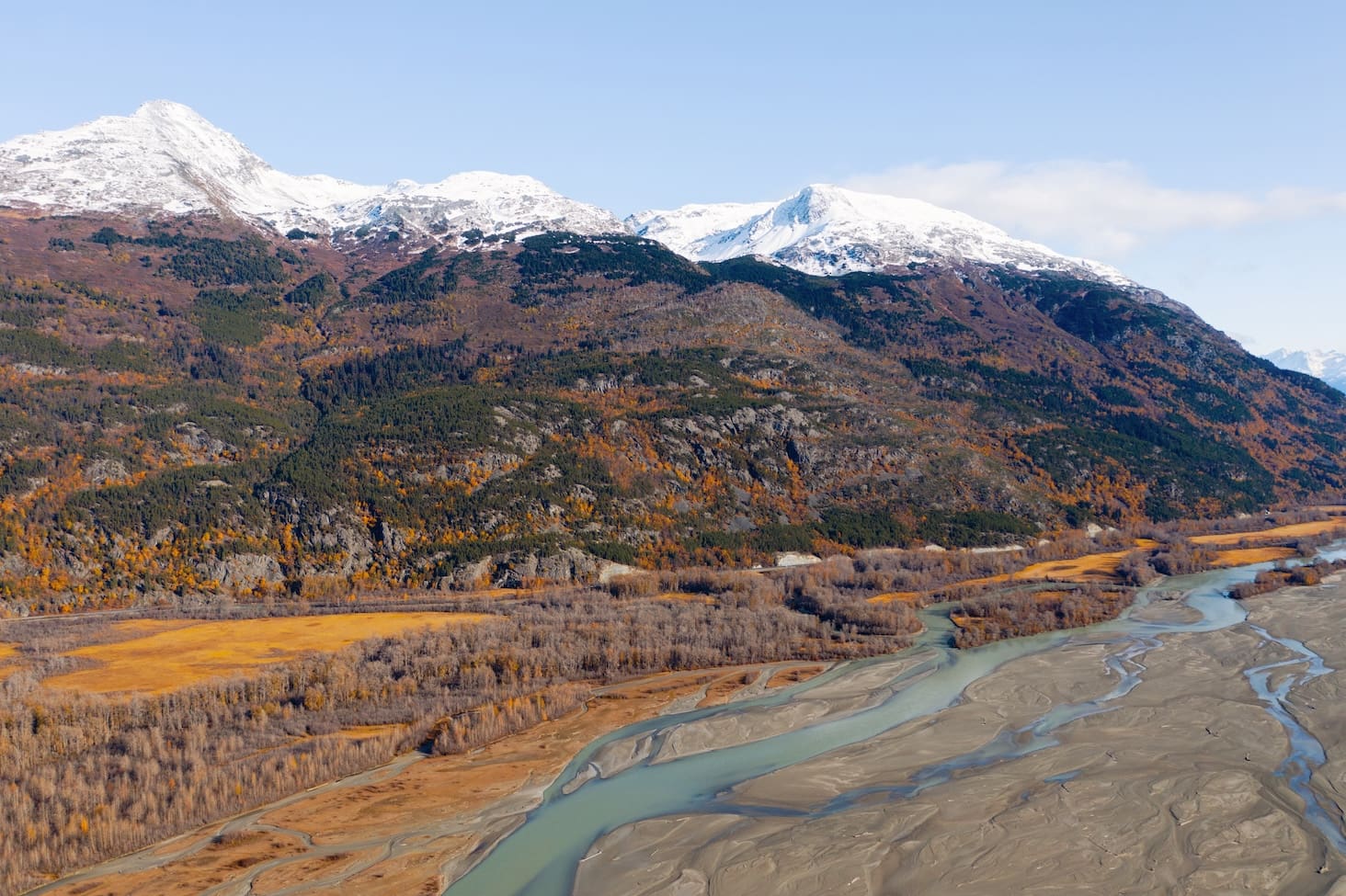
The Chilkat Valley. Photo by Wondercamp.
Alaskans continue to demonstrate how important our public lands are: public lands are tied to how we get our food, how we access our favorite trails, and how many of us make our living. This connection makes us the perfect advocates for public lands.
Can you share an example of how that place-based approach works in practice?
I’ve been working with the tribal government in Klukwan since I moved to Haines. The Chilkat Valley is facing potential mining development, and the community has real concerns about what that could mean for salmon, water quality and their way of life.
Together, we developed a water monitoring program to better understand the health of the watershed. Establishing a baseline is critical, as it gives the community the information they need to engage in decision-making from a position of strength. AVF’s place-based approach made that possible. Because we have people living and working in Haines and Klukwan, we could build something that felt right for this community, while also connecting it to similar monitoring efforts elsewhere. This has helped grow a Tribally-led water monitoring program with full-time Tribal staff.
Alaska contains a significant share of the nation’s public lands. What opportunities does that create?
Alaska is positioned to lead on the next generation of public lands stewardship, particularly through the lenses of climate stabilization, biodiversity conservation and Tribal sovereignty.
Our public lands are deeply intertwined with traditional cultures that have been here since time immemorial. They hold significant ecological value, storing more than half of the carbon found in all U.S. lands and providing habitat for some of the world’s largest migrating wildlife herds, including the barren ground caribou.
That connection between people and place also holds so much deep knowledge. Indigenous living language and cultural practices carry generations of understanding about how these landscapes function and how they can be sustained. That knowledge should help guide how we steward these critical carbon reservoirs and intact landscapes.
There is a real opportunity in that. We can protect key habitats, like Teshekpuk Lake, one of the world’s largest circumpolar freshwater ecosystems. We can focus land management on carbon storage and sequestration, particularly “irrecoverable carbon” in permafrost soils, which hold upwards of 40% more carbon than the atmosphere. And we can promote wildfire resilience, soil conservation and wildlife migration by shaping policies and practices that reflect both ecological science and long-standing relationships between people and place.
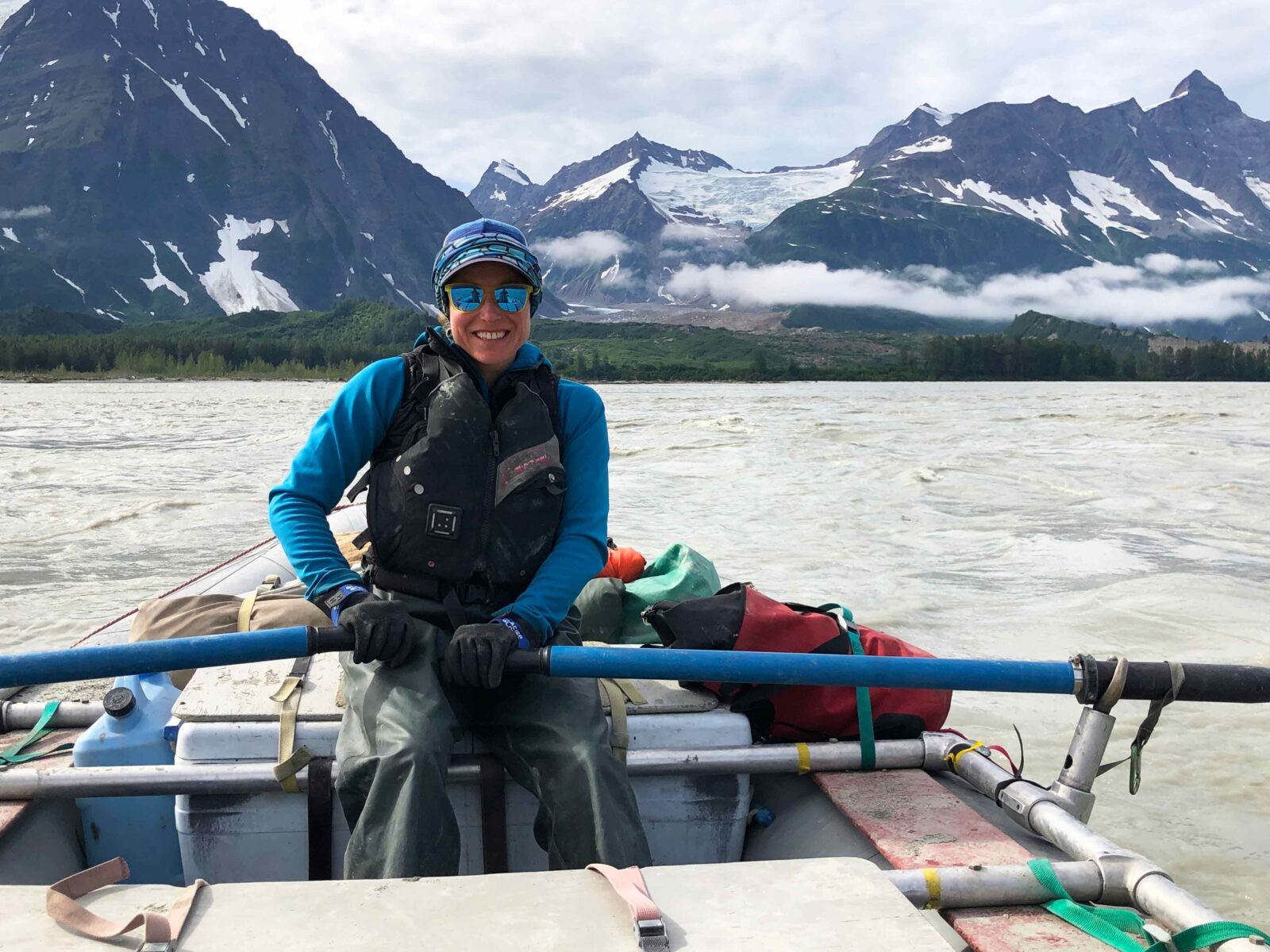
Dr. Natalie Dawson rowing. Photo provided.
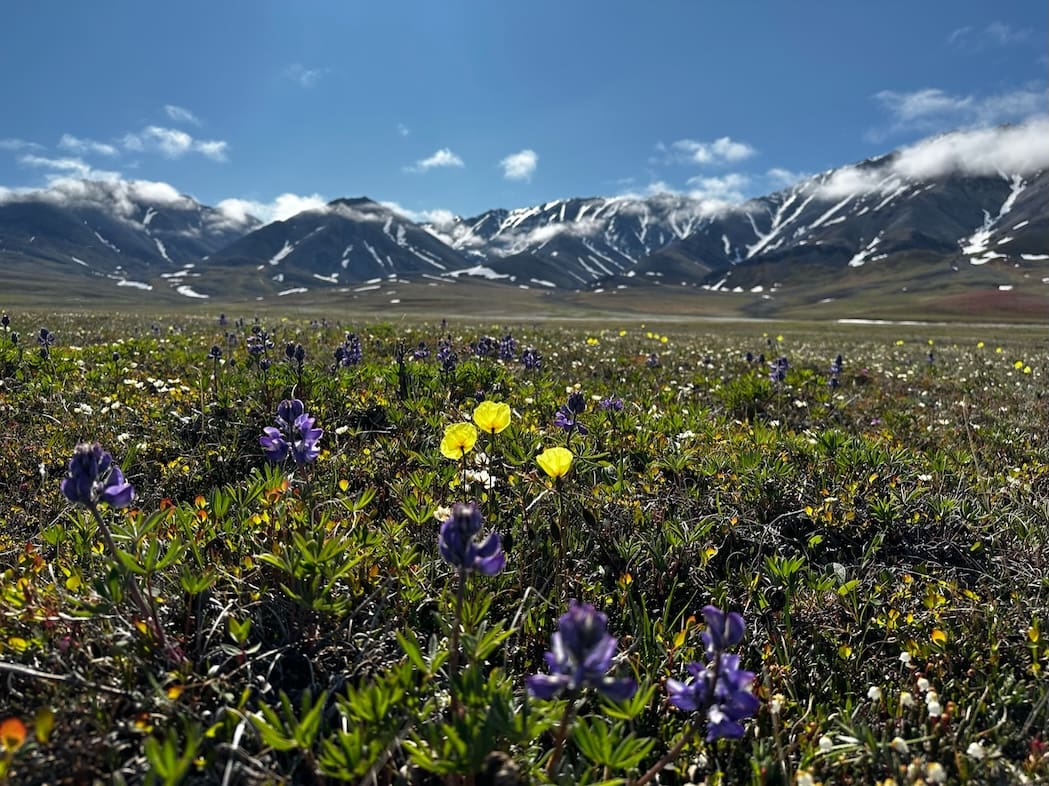
Photo by Natalie Dawson.
Alaska’s federal public lands are facing pressure from multiple directions right now — from the Tongass to the Arctic. What’s actually at stake?
At the deepest level, what’s at stake is the public process itself. Public lands don’t stay public because of any single law; they stay public because we as a society have decided, collectively, that land held in public trust matters. The structures that make that work – environmental review processes, subsistence advisory boards, Tribal consultation requirements – are being systematically undermined. When those processes erode, whoever holds power at any given moment can move faster and with less accountability on decisions that affect everyone.
In Alaska, that has a specific and serious dimension. Federal public lands here carry what’s called rural subsistence priority, a legal recognition that Tribal and rural communities depend on these lands for food. In rural Alaska, the right to harvest fish, wildlife and plants is fundamental; it is how communities have fed themselves for generations. That right is now being challenged, in part by an attempt to gut public representation on the Federal Subsistence Board, the body whose involvement is required before subsistence regulations can change. Remove Tribal voices from that board and you remove the mechanism through which the people most impacted have a say in decisions governing their way of life. Another situation I’m watching closely involves Teshekpuk Lake on the North Slope. It is a critical calving ground for the Teshekpuk Caribou Herd and an important staging area for hundreds of thousands of migratory birds. The Nuiqsut Trilateral – an entity comprising the city, Tribal government and Native corporation of Nuiqsut – negotiated a right-of-way agreement with the federal government giving the community meaningful control over roughly a million acres in the Teshekpuk Lake area. This is a real property right, negotiated as part of the approval of the Willow oil development project. The Department of the Interior canceled it, and Nuiqsut sued to have it reinstated. That case illustrates exactly what’s at stake: agreements made in good faith, through legitimate processes, being reversed, and communities having to go to court to defend rights they already hold. We’re seeing similar actions elsewhere. An update to the Tongass Forest Management Plan is being rushed through on a compressed timeline. Alaska Native Claims Settlement Act lands are at risk of transfer to state ownership. Protections are being proposed for rescission. Different mechanisms, same pattern: compress the process, reduce public input and move.
AVF is working with policy and legal experts and partners across the state to ensure that decisions about Alaska’s public lands are made with consideration of science, Tribal rights and local knowledge. When the processes that guarantee that are stripped away, everything else becomes harder to protect.
Amid these challenges, what gives you hope about the future of public lands in Alaska?
The overwhelming statewide and nationwide support that we’re seeing for our public lands inspires me. There are so many people who care about public lands, who care about Alaska’s lands and waters and are willing to help ensure they remain intact for future generations.
I find incredible hope in the leadership and wisdom held by our Tribal government partners. President Kimberley Strong, of Chilkat Indian Village (Klukwan) reminds me that, “We are working for the people who want to be here and contribute to Alaska’s future.” Her definition of the future stretches many generations beyond our own. Last but not least, I find hope in knowing that we are but a small part of the change and opportunity that will grow from these incredible lands. The same inspiration I found in the Tongass as a young field biologist standing beneath an old-growth cedar tree canopy may one day ignite a new generation of passionate leaders who will steward Alaska’s public lands and waters.
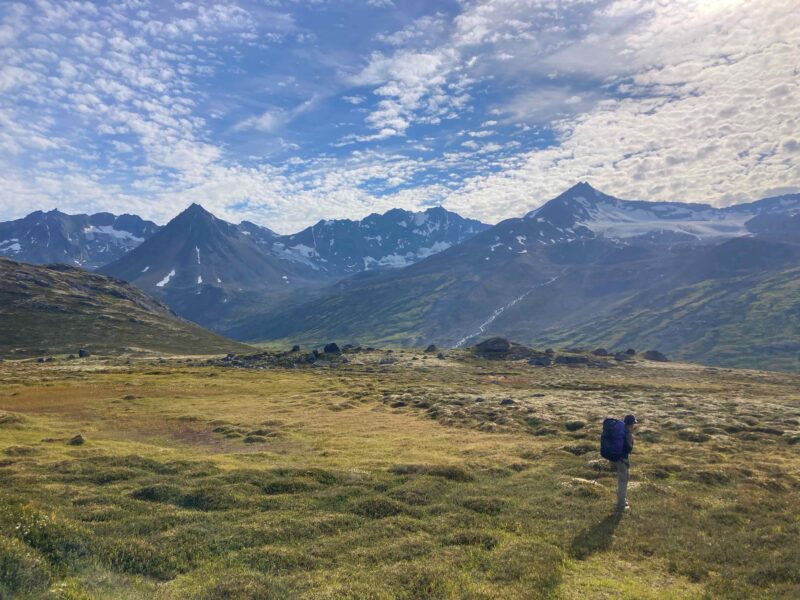
Photo by Natalie Dawson.
If you would like to learn more about Alaska Venture Fund’s public lands work, please visit here.
Written by Maggie Bryan, Carbon and Climate Fellow Photos courtesy of Natalie Dawson and Wondercamp Published: March 2026
Stay connected.
Sign up for updates on how we’re driving change, building powerful partnerships, and creating opportunities for all Alaskans. You can unsubscribe at any time.
Read our Website Privacy Policy to learn more about how we take care of your information.