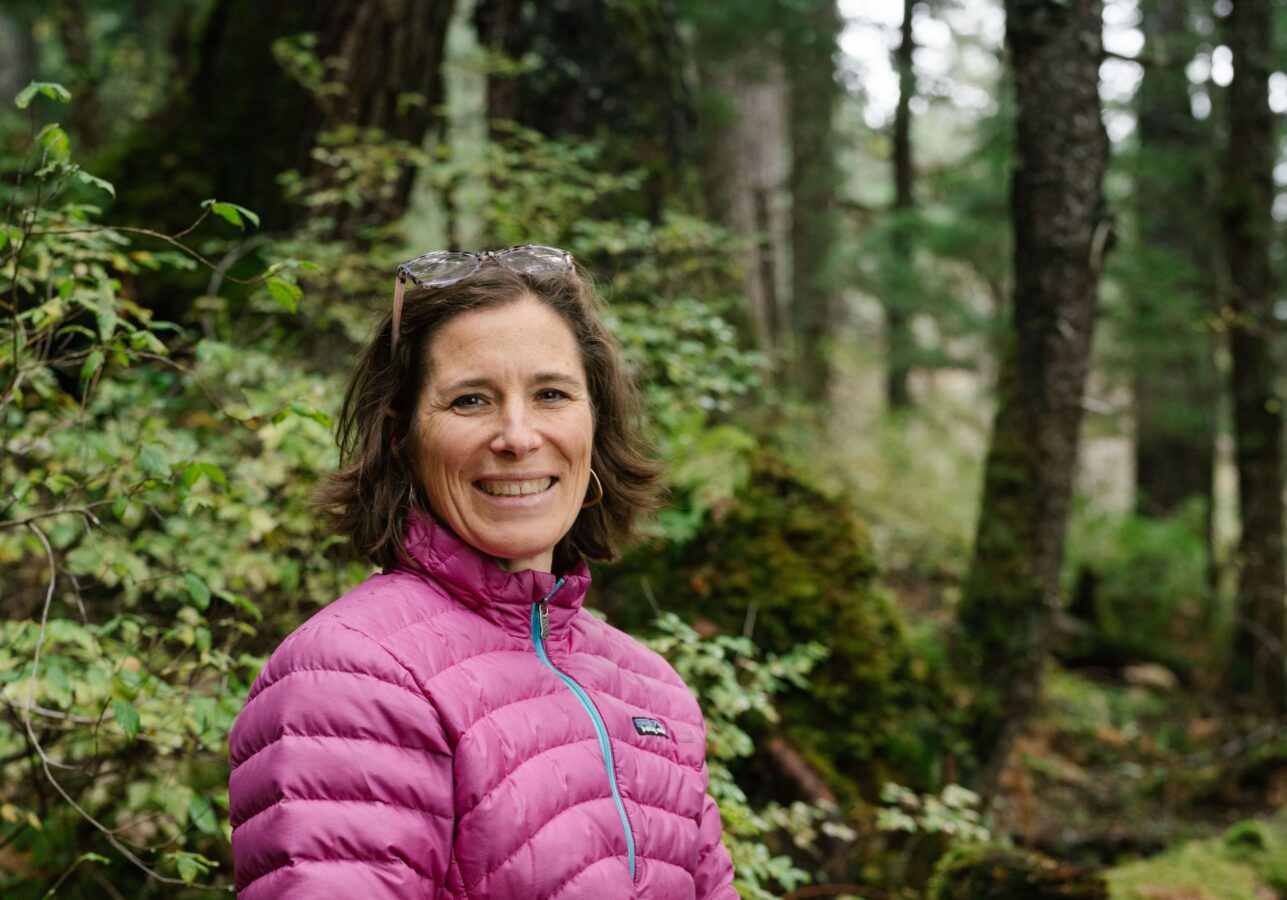
Alaska Venture Fund Partner Erin Harrington leads the Alaska Climate Impact Project, a new effort to transform Alaska’s vast carbon stores and other climate assets into climate solutions, jobs and economic opportunity. Her work reflects a core belief: that Alaska holds extraordinary responsibility — and opportunity — in the global response to climate change.
Envisioning a climate future for Alaska is uniquely complex, and uniquely consequential. Alaska contains more than half of the United States’ total stored carbon in its forests, soils, permafrost and peatlands. With 95% of the state’s ecosystems considered intact, the state plays an outsized role in keeping carbon safely locked away, even as wildfire and permafrost thaw pose growing and interconnected risks.
Protecting these systems is not only a climate imperative. Erin believes it is also an economic one. The Alaska Climate Impact Project is rooted in a simple idea: that effective stewardship of Alaska’s lands and infrastructure can support climate stability while also creating durable economic opportunity for the people who live here.
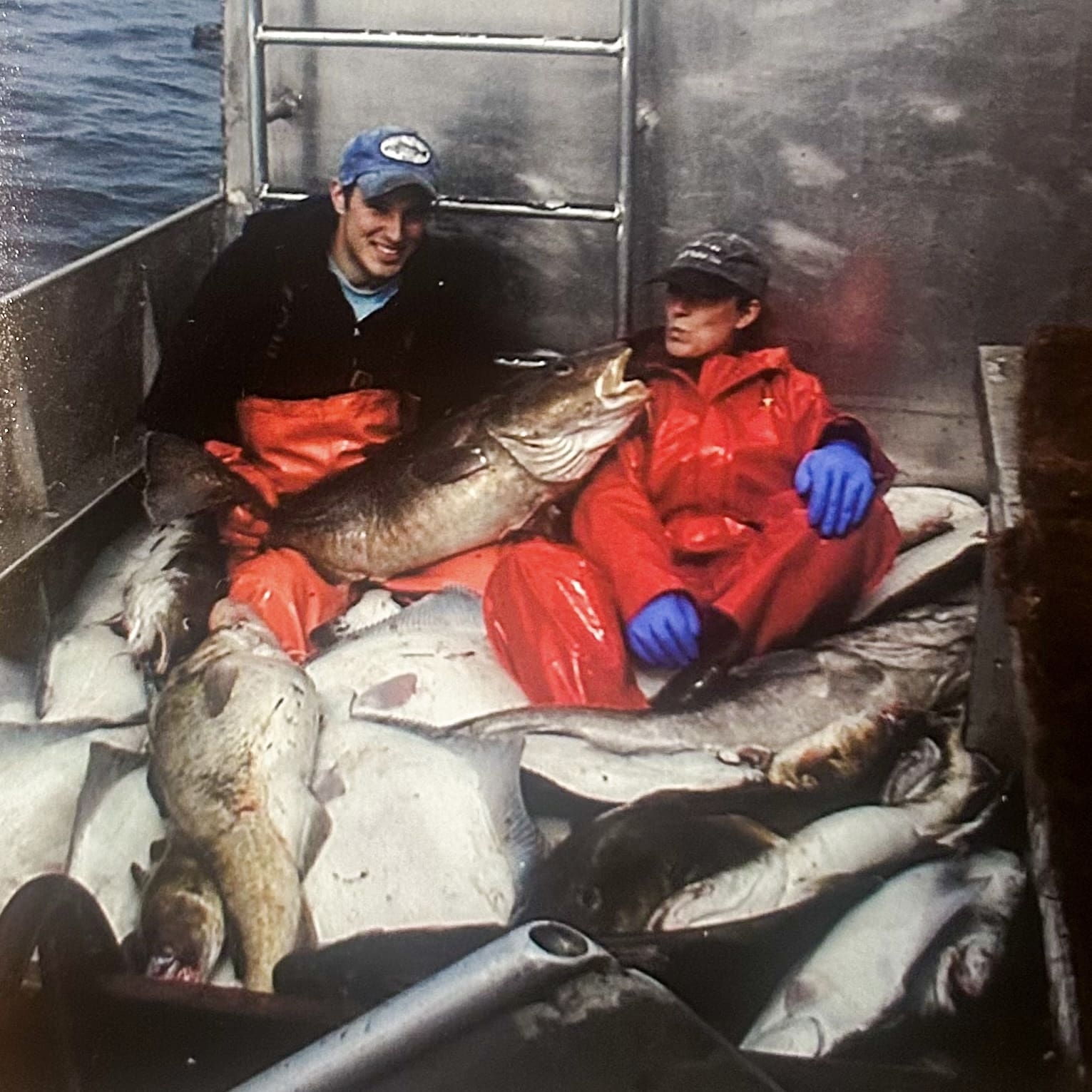
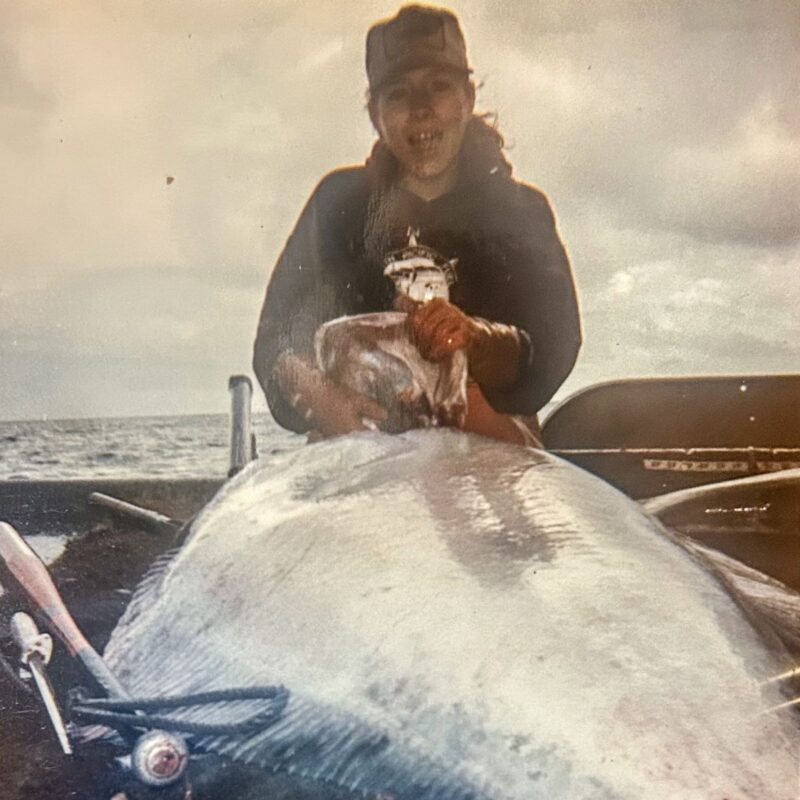
Erin’s understanding of the relationship between the health of Alaska’s ecosystems and its economic wellbeing did not come from theory alone. It grew out of a lifetime spent working directly with Alaska’s natural systems, and with the communities whose lives and livelihoods depend on them. Erin grew up working on Alaska’s oceans as a commercial fisherman, starting on her father’s boat when she was a child. Once she had finished school and returned home to Alaska, she began building a career in economic research and public policy, while still taking time away to fish with her family whenever possible.
Left: Erin fishing near Adak, Aleutian Islands ca. 2000. Photo provided.
Right: Erin offshore of Kodiak ca. 1998. Photo provided.
Over time, Erin’s focus increasingly turned toward the imperatives of climate change, shaped by what she was witnessing firsthand in Alaska: reduced snow pack, retreating sea ice, extreme flooding, accelerating wildfire and increasingly fragile salmon systems.
Erin says her first “gut-level” sense of the impact of climate change in Alaska came from the view out of airplane windows.
“I was working in the legislature and regularly flying the 500 miles between Southcentral Alaska and our capital in Juneau,” she recounts, “and I could see that the glaciers were retreating. Really visibly. From the sky, it’s easy to see where areas of mountains and valleys have been newly exposed after millennia under ice. I remember thinking over and over, ‘The glaciers of my childhood are dying.’”
Mendenhall Glacier in Juneau. Over the last 20 years, the glacier ice attached to bedrock has receded at about 56 feet per year, while ice on the lake itself has receded at approximately 148 feet per year. Photo (right) by James W. Thompson.
At the same time that the glaciers were retreating, Erin sensed a parallel social and economic retreat in Alaska’s communities. In fisheries, for example, regulatory changes intended to protect fish stocks reshaped access and ownership, with devastating consequences for the people who worked on the water.
“There was a radical consolidation of wealth and assets,” she says. “The deepest losses were in Indigenous communities, but they hit small-boat fishermen across Alaska. You could see fishery towns hollowing out. Fewer people on the water. Less connection to the places that sustained them. But I could also see it in the economic analyses I had run at work.”
For much of her early career, Erin believed deeply in the power of individual action, and protecting people’s access to natural systems. But as climate change became an increasingly clear threat, her focus began to shift to systems-level change. At the same time, she found herself wrestling with something that felt like a fundamental disconnect between conservation and the on-the-ground impacts of well-intended policies.
“I realized that ideas that looked good on paper were often totally divorced from the impact they had on communities. When people lose connection to the lands and waters, how can they bear witness to change and carry forward the knowledge of these places? How can we advocate for and protect natural systems from which we have been severed?”
After the birth of her son, Augustine, Erin’s concern about climate change sharpened into something more personal.
“I felt scared for his future. At the same time, I needed to believe there was a way I could help shape a future in which he and his generation could thrive.”
In 2021 and 2022, while working at one of the state’s major economic consultancies, Erin was tasked with exploring how climate change and adaptation could be part of a new economic paradigm in the state.
“The timing was just right,” she says. “I was already asking: what’s next for Alaska? And then there was this opportunity to imagine, not just the perils of climate change, but how it links with our vision for our economy and our future.”
That work helped solidify a core insight. Climate response and economic resilience are not competing goals. They are deeply linked.
The client for that research? Alaska Venture Fund. Within a year Erin had moved to work with AVF.
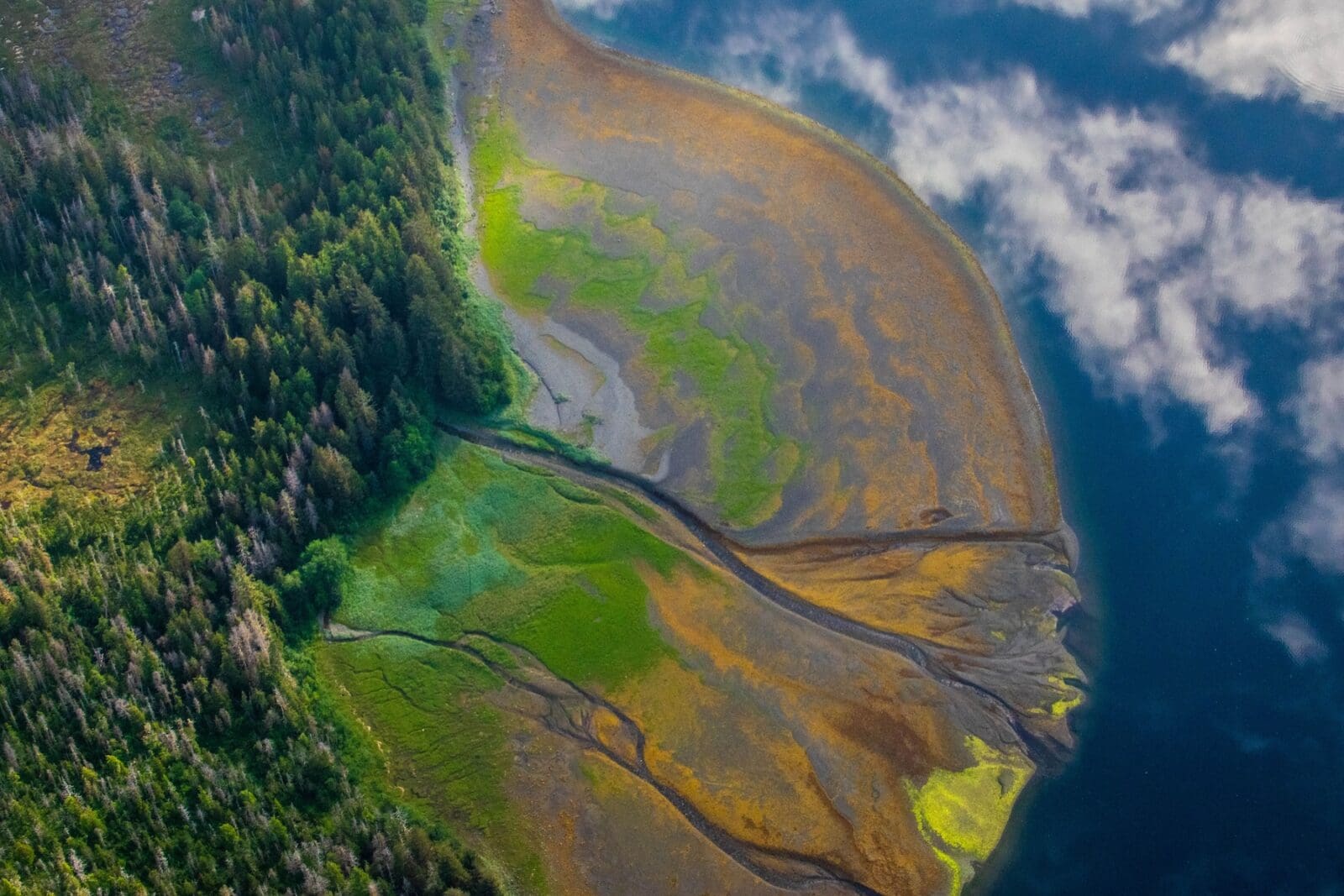
A bird's eye view over an estuary nestled along the coastlines of Southeast Alaska. Photo by Ryan Morse.
Alaska’s scale, Erin says, is part of its strength. “We’re a huge state with a small population. We can reach decision makers at all levels. And the resource we’re stewarding – tens of gigatons of carbon – matters to the entire globe. In the next five years, we need to find ways to really understand the value of that carbon, and learn how to tie its protection to real economic opportunity here at home.”
Erin has a hope for Alaska’s future. She imagines her son’s generation working hands-on with the state’s lands and waters, just as past generations have, but in new ways. Measuring forest carbon instead of flagging trees for harvest. Managing landscapes to reduce wildfire risk. Building the technology, finance and policy needed to support stewardship at scale.
Erin is clear eyed about the challenge. “For most of my life, oil was the foundation of wealth and opportunity in our state,” she says. “Today, oil and gas are still absolutely important to Alaska's economy. But it’s not a reliable foundation for the future. We have to think and act toward what comes next.”
Today, Erin leads the Alaska Climate Impact Project, a new initiative focused on stewarding Alaska’s carbon-rich landscapes and natural resources for the benefit of its economy, people and the climate. The work centers on convening practitioners, advancing research and testing financial and policy approaches that can sustain some of the world’s most powerful, and most vulnerable, climate assets. “This is the work we can do here” Erin says. “In the place I care about most. In service of my child, his generation and the generations that will follow.”
If you would like to learn more about the Alaska Climate Impact Project, please visit here.
Photos courtesy of Josh Corbett, James W. Thompson and Ryan Morse Published: January 2026
Stay connected.
Sign up for updates on how we’re driving change, building powerful partnerships, and creating opportunities for all Alaskans. You can unsubscribe at any time.
Read our Website Privacy Policy to learn more about how we take care of your information.