Reimagining the Role of Our Largest National Forest
The Tongass National Forest covers more than 16 million acres, making it not only the largest national forest in the United States, but one of the largest intact temperate rainforests on the planet. The plan that governs how it is managed is revised once in a generation. That revision is happening now, on a compressed timeline, with a draft plan expected this fall and a final decision targeted for 2027.
What’s at stake is consequential: land use designations, subsistence protections, the role of Indigenous knowledge and how the forest responds to a changing climate. The US Forest Service has outlined six goals for the revised plan, but the Tongass Initiative partners and the communities they work alongside have identified significant gaps, including climate change, Indigenous co-stewardship, and the science underpinning species conservation, which are not being adequately addressed. The public consultation process is moving quickly: a first public comment period closed in March, and a new one opened almost immediately after, running through May 6th. Community workshops are underway across Southeast Alaska.
Below, our colleague, Natalie Dawson walks through what AVF and our partners are watching and asking for through this process.
Engaging Today for Tomorrow’s Tongass
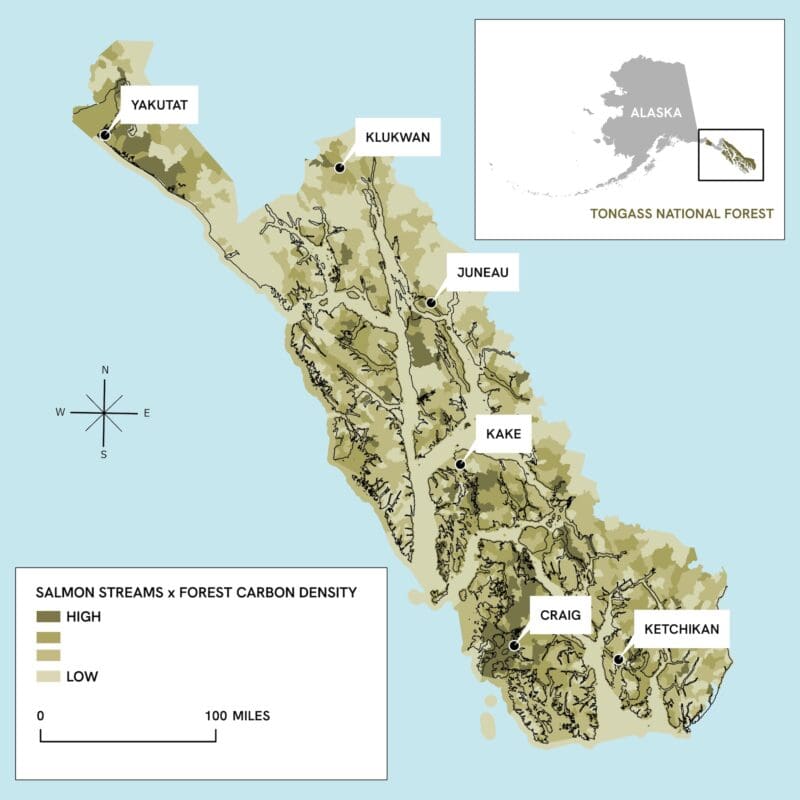
The Tongass National Forest. Map by Colin Shanley.
It is the spring of the northwest wind. In 2012, I stood in front of a group of peer scientists and described the rediscovery of a forest weasel in Southeast Alaska — the Pacific Marten. Its latin name, Martes caurina, means “of the northwest wind” and though first described by naturalist C. Hart Merriam in 1890, it was genetic research on the Tongass National Forest that uncovered a history of island isolation and climate-driven colonization, as these weasels followed the spread of old growth forests north from southern Pleistocene refugia along the Pacific coast.
This weasel species is now one of many “species of conservation concern” identified in the recent release of the Tongass National Forest Notice of Intent to Proceed with the Tongass Forest Plan revision. The notice provides draft language from the US Forest Service describing their intent to move forward with a Forest Plan revision and creates a 30-day window for the public to comment on the proposed direction for the plan revision. Scoping is the formal process that begins the environmental review for the Forest Plan. As the plan revision process moves forward, the Tongass Initiative partners are highlighting areas where the Forest Plan revision should direct resources to create specific desired conditions and management direction.
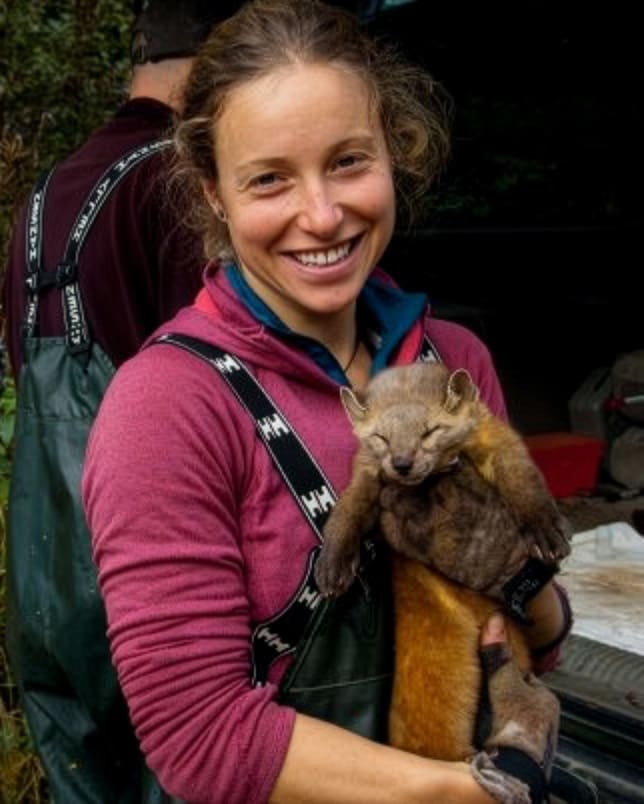
Natalie Dawson with Pacific Marten. Photo: provided
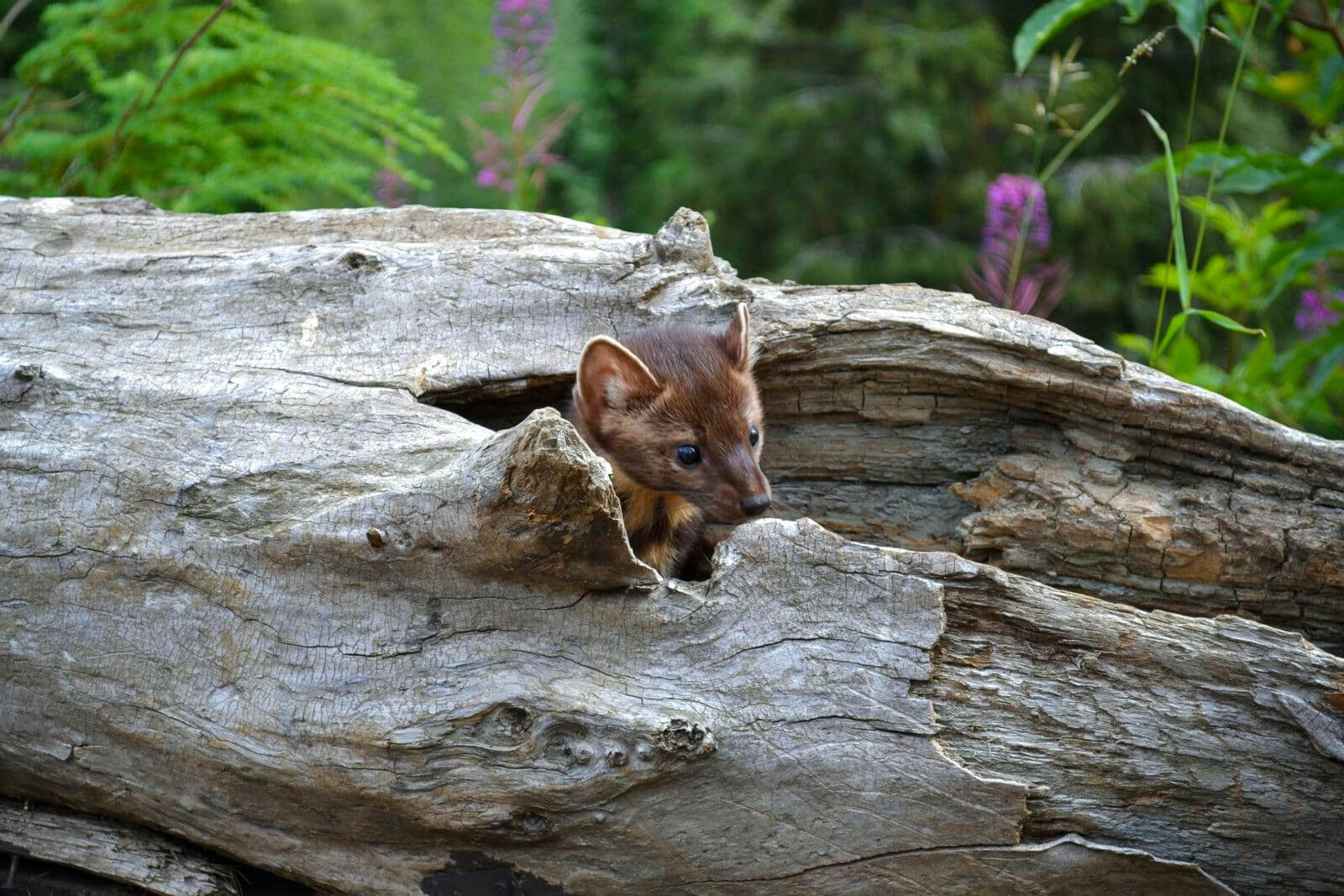
Pacific Marten in Haines, Alaska. Photo: Glen Mc Call
Species of Conservation Concern and the Conservation Strategy
Species of conservation concern are part of a broader conservation strategy that will be reviewed for the Forest Plan revision. First written in 1997, the conservation strategy does not reflect climate change vulnerabilities, and the drivers of ecological changes on the forest—like Yellow cedar decline, forest insect infestations, invasive species introductions on islands and genetic rarities—that create vulnerabilities for Pacific Marten populations. These impacts compounded on the Tongass National Forest were not known thirty years ago, but now need to be taken into account.
Due to natural isolation created by island fragmentation, and severe habitat modification through decades of industrial clearcut logging, the conservation strategy must be updated to not only incorporate the best available science, but to anticipate future changes and create a roadmap for forest-wide restoration practices as well as climate-based conservation priorities. Stream buffers may need to expand based on historic logging impacts. New old growth reserve networks may need to be established with updated scientific rationale. Many of the original old growth reserves that created the “coarse filter” for the 1997 conservation strategy no longer exist, and some of them are located in roadless areas, which will lose protections when the National Roadless Rule is rescinded.
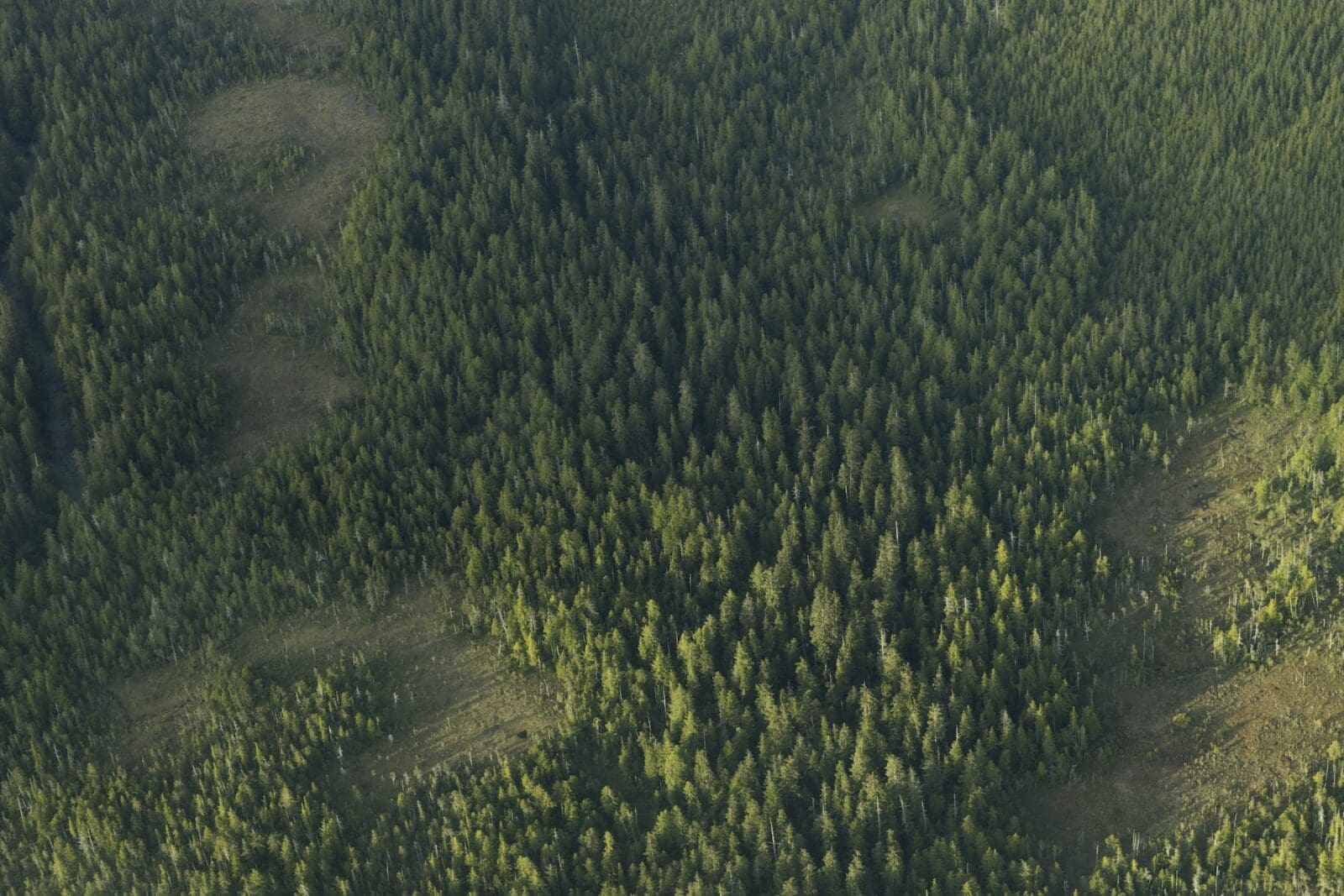
Aerial view of the Tongass National Forest. Photo: Nathaniel Wilder
Planning for Climate Change and Uncertain Futures
Climate change featured heavily in the draft Tongass Forest Plan assessment, and yet remains a minor component of the Notice of Intent and draft “Need for Change.” Our partners are highlighting the importance of climate change on all aspects of the forest plan process, from addressing the impacts of declining winter habitat for Sitka Black-tailed deer to lack of red cedar regeneration after logging and hemlock dominance. Climate change will also shift animal and plant ranges, making corridors that connect both in elevation and spatial extent, important attributes for long-term adaptation strategies. This includes thinking about specific management areas — such as Deer Winter Range units, to protect long-term sustainability for a species that is critical to subsistence across Southeast Alaska.
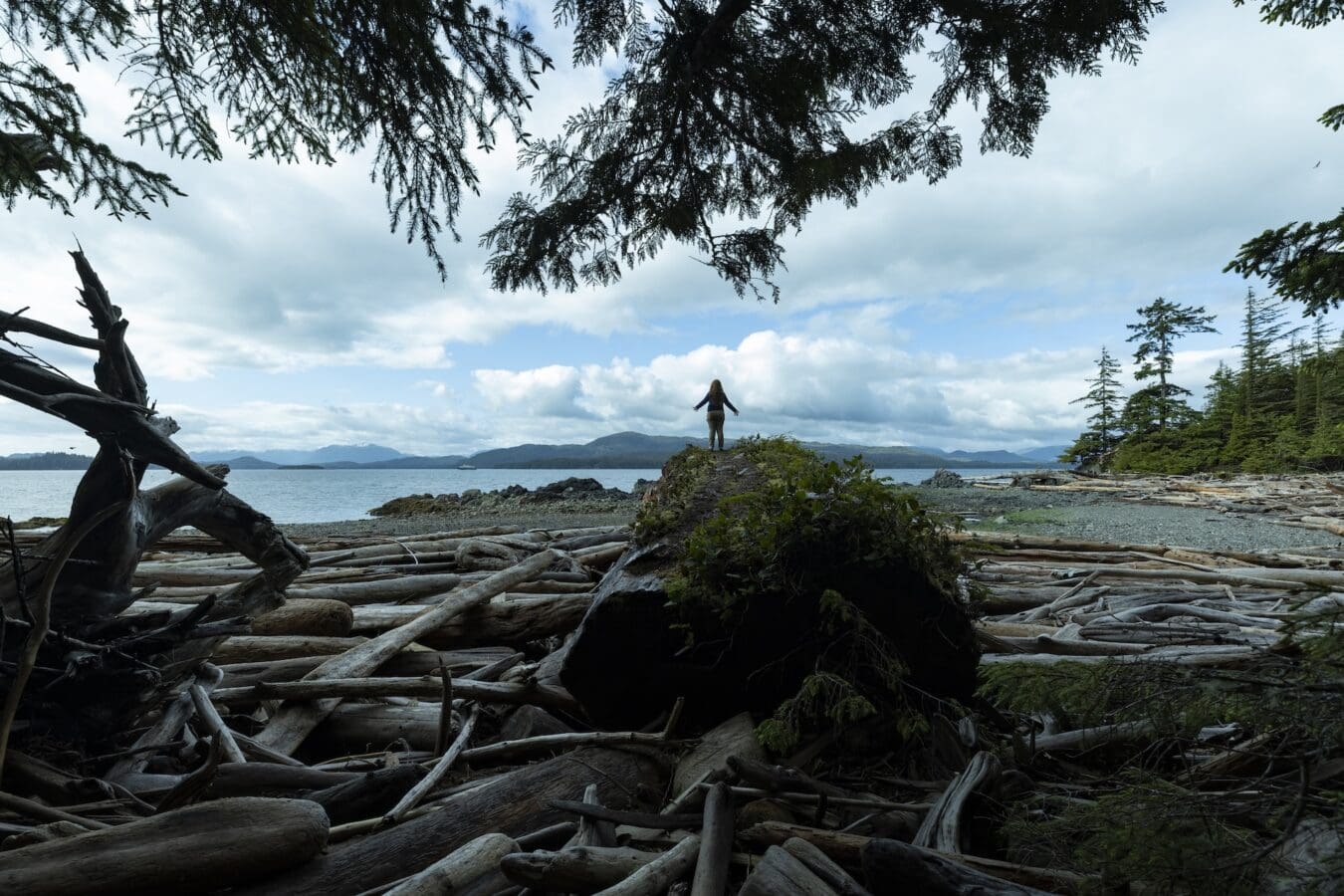
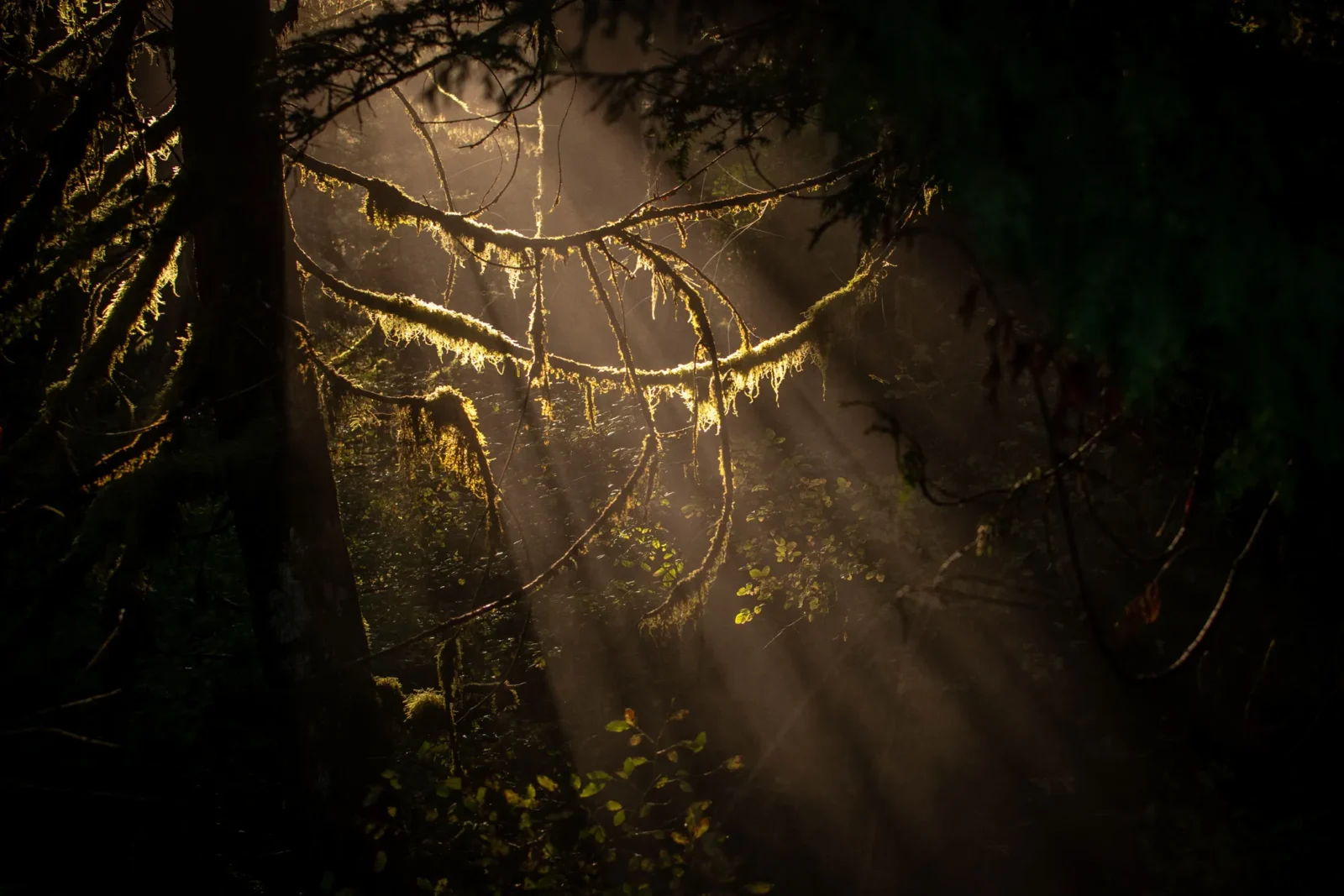
Photo: Ryan Morse
Reimagining the Role of Forests
Indigenous knowledge binds all of us to the land and water in Southeast Alaska. Whether you live in a small community of less than 2,000 people, or the state capital, we know that the Tongass National Forest is a broader landscape of food and culture, connecting us to stewardship practices across generations. The “Tongass is an Indigenous Place” chapter in the Forest Plan assessment lays out a framework for co-stewardship of the national forest lands that could create a first-of-its-kind collaboration across many Tribal governments and several interlocking federal agencies with authority over US Forest lands. This can include new contracting authorities between Tribal governments and the USDA, using tools like Public Law 93 -638 and the Farm Bill. Indigenous guardians can reclaim stewardship and monitoring across Southeast Alaska, providing knowledge where now there are only gaps. Over 500 species of plants and animals were surveyed for potential “species of conservation concern” and 64% of them were determined to have no BASI (best available scientific information) available. They were not listed as species of conservation concern, not because there is no concern, but because we do not have the information to know if they are even still present on the Tongass. We could be supporting and financing an entire workforce across Southeast Alaska, in our communities, to do the research and monitoring needed to make informed decisions.
The issues described here represent only some of what our Tongass Initiative partners are tracking in these early stages of the Forest Plan revision. Our work is ongoing and we will continue to provide updates as the process moves forward. We are also encouraging communities across Southeast Alaska to use a new Community Alternative tool developed by our partners, to engage directly in the drafting of Forest Plan components. The Tongass Forest Plan revision is the largest forest plan in the U.S. and it is being deliberately fast-tracked with the hopes of completing the process by Summer 2027. Engaging now means each of us will have a voice in shaping our collective future.
Written by Dr. Natalie Dawson, Alaska Venture Fund’s Director of Strategic Partnerships
Photos by Nathaniel Wilder, Natalie Dawson, Glen Mc Call and Ryan Morse
Map by Colin Shanley
Published: April 2026
Stay connected.
Sign up for updates on how we’re driving change, building powerful partnerships, and creating opportunities for all Alaskans. You can unsubscribe at any time.
Read our Website Privacy Policy to learn more about how we take care of your information.