Reimagining Community-Engaged Fire Education: Q&A with AVF’s Community Wildfire Resilience & Workforce Coordinator
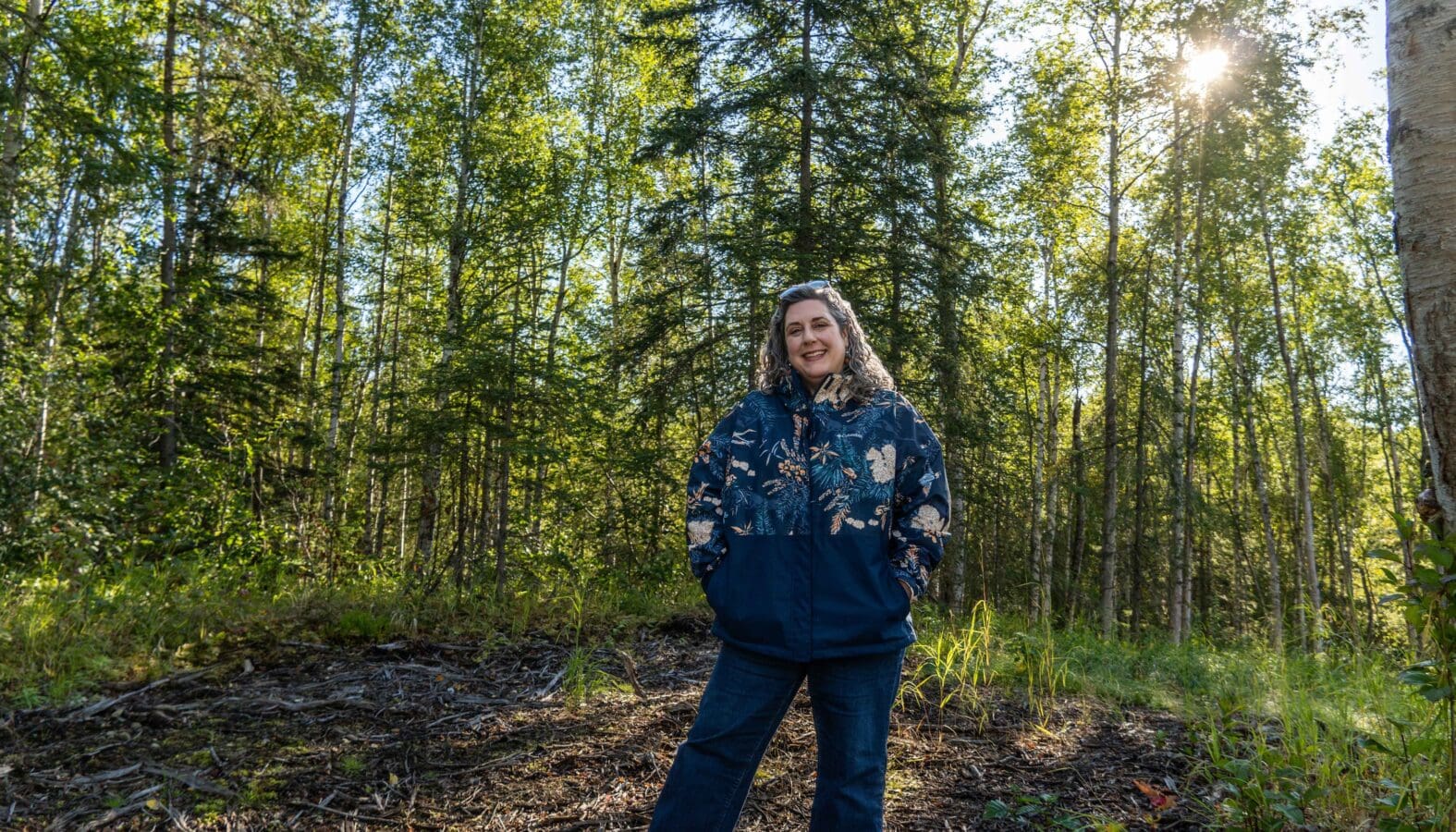
Lisa Amaniq Shield has one foot on the tundra and one foot in the city. Decades of living and working in and with rural Alaska Native communities are woven into how Lisa navigates the world but especially her work in fire. As AVF’s Community Wildfire Resilience & Workforce Coordinator, Lisa brings decades of frontline fire safety training and fire education work to communities across the state. Lisa is part of AVF’s Alaska Wildfire Resilience Initiative, an effort to reimagine wildfire resilience in ways that protect Alaska’s communities, ecosystems and carbon stores together.
Lisa sat down with AVF’s Alaska Fellow, Maggie Bryan, to talk about what drives her work and how AVF’s wildfire initiative is working to reshape fire safety for the better of our communities and our landscapes.
This interview has been edited for length and clarity.
Maggie Bryan: How has your experience growing up in rural Alaska informed your outlook on community resilience, public safety and fire protection work?
Lisa Amaniq Shield: When I was just three months old, my parents relocated our family from Arizona to Selawik, a small community in Northwest Alaska. There my mother taught school and my father served as the “go-to-fix-it-guy” and was appointed town sheriff before the creation of the Village Public Safety Officer program. When we arrived, my parents chose not to live in the designated teacher housing set apart from the rest of the village, because they understood how much it would isolate us from such a welcoming community. I am not Iñupiaq by birth, but the Elders and families who raised me in Selawik and Kotzebue have long made it clear that they get to choose their families and I am “theirs.”
Years later, when I got to go back to do fire training in Selawik, over 40 years after they’d known me as a toddler, people recognized me. “Oh my god, you’re Amaniq, you’re Lisa Adams! How’s your parents?” We weren’t outsiders living there; we were part of the community. They lovingly took my parents, my sister, my brothers and me in as their own.
After a few years in Selawik, we moved to Kotzebue. Growing up in Kotzebue, I saw outsiders come in and try to tell us how to live our lives, but they didn’t know us. They didn’t know what we’ve been through, and they hadn’t cared to listen to the stories passed down to us from our Elders. That sense of ownership, “our Elders,” was expected of me growing up, and it stays with me. I don’t claim to understand all the stories or struggles of a community; they are as diverse and complex as each individual, and that awareness lets me show up authentically, and hopefully effectively, in communities where I am the outsider.
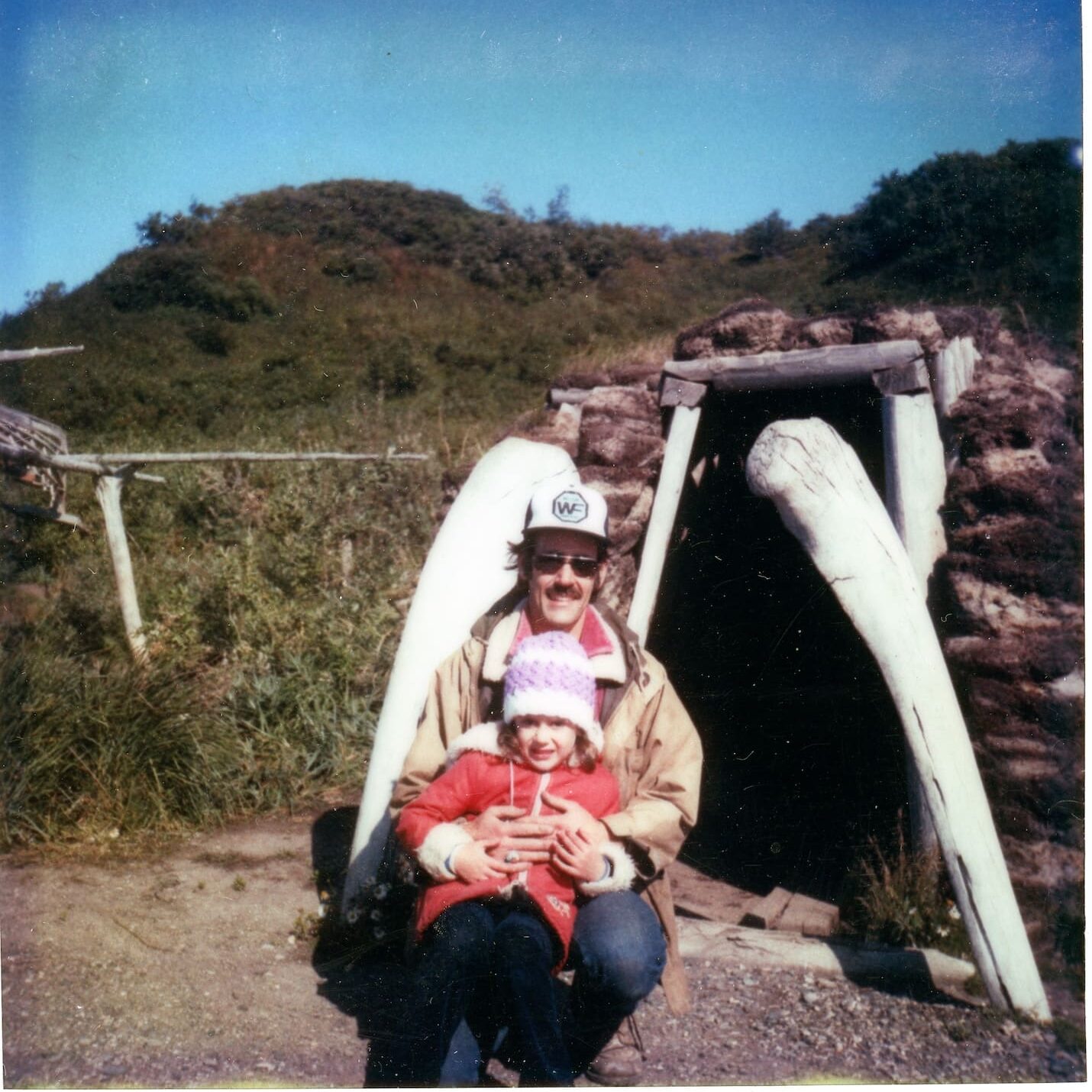
Lisa with her father, Terry Aaluk Adams, in Kotzebue. Photo provided.
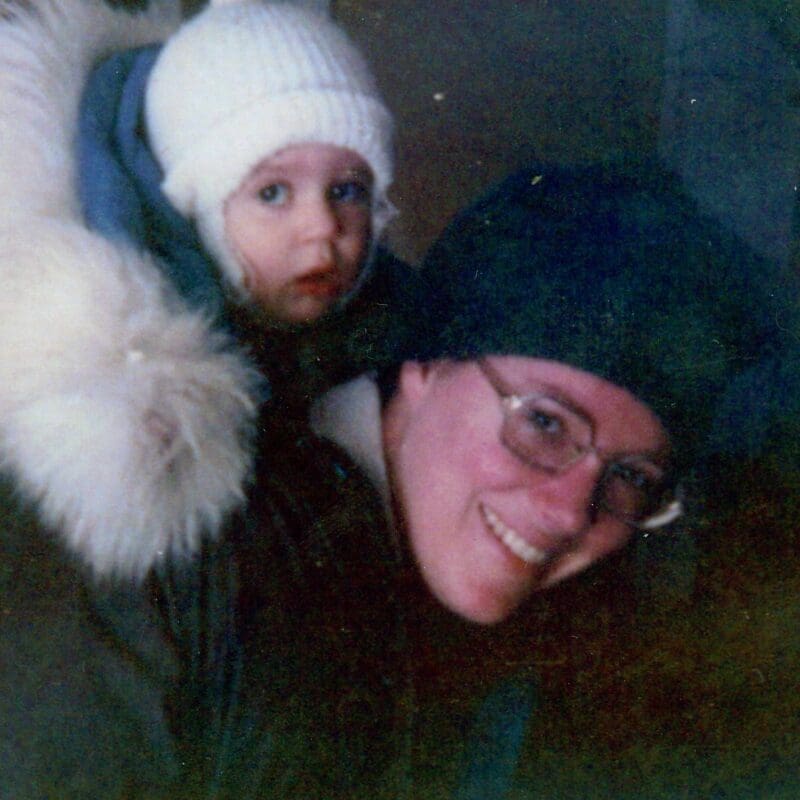
Lisa with her mother, Sue Tiŋuk Adams, in Selawik. Photo provided.
MB: What experiences have you had working at the fire service and with communities across the state that inform your current role?
LAS: Over the years, I’ve noticed that most people involved with fire in Alaska are focused on their own department and community — their needs, requirements and capacity at any given time. They have blinders on, and rightfully so. In small communities, the person focusing on fire usually also wears several other hats — they’re the mayor, the water treatment operator, the power plant operator and they still serve their community as the fire chief. They don’t have time to understand how a community or fire department 500 miles away, handles similar incidents. And nearly 60% of our communities don’t even have a registered fire department.
Working at a statewide level — I’ve worked with over 150 Alaska communities — allowed me to learn from firefighters in the largest professional fire departments to individual community responders who have little or no training. I got to hear where the successes were along that whole line, from the highest levels of certification to none at all, and what the learning points were at every stage. After many years of listening to rural community leaders and my fire service mentors, I started to see a new way to approach our rural fire response.
In my current role, I get to collect all those pieces and offer them to a community. FIRE GAP (Fire Incident Response Education, Guardianship and Preparedness) is one of those ways: it lets a community decide how and when to take the action it feels is needed to protect itself from fire. Paul Pellegrini, a wildfire and structure fire expert, and I built FIRE GAP to meet the training and response needs of those communities. We want to provide critical safety skills, reduce fire risk and make the training accessible and affordable. We know FIRE GAP is worth it. Our pilot project in Igiugig has already demonstrated about a $14 return on $1 of investment.
MB: What drew you towards public education in the first place?
LAS: I’ve always been an educator. When I was really young, I worked mostly with children, and quickly started shifting into youth and adult education. At first I taught parenting classes, and later I spent time abroad running public education campaigns on things like drug and alcohol addiction, domestic violence, sexual abuse, and suicide. Following the social services outreach, I took a role where I could focus on a single community, providing public education around police, fire, EMS, and all-hazards response. All that outreach work felt very rewarding to me, I could see the shifts in people’s understanding and their empowerment to do similar work in their own communities.
Later, when I was working at the State Fire Marshal’s office, I had a great mentor, Steve Schreck, who saw something in me right away. Soon after hiring me, he said, “I want you to start teaching — get in front of the class and do this work.” He told me I had a way of translating what they were trying to say as fire service professionals so students could incorporate the information into their daily lives. I’m passionate about bridging the gap between the Western compartmentalization of fire issues into a more holistic manner of understanding like the way I was raised. Over the years I have had many fire chiefs and firefighters from large and small departments share that they have never seen anyone engage rural fire chiefs and communities the way I do. My motivation to continue this work has really come down to the fact that it is genuinely needed and I am lucky to be in a position where I can be of service to our communities.
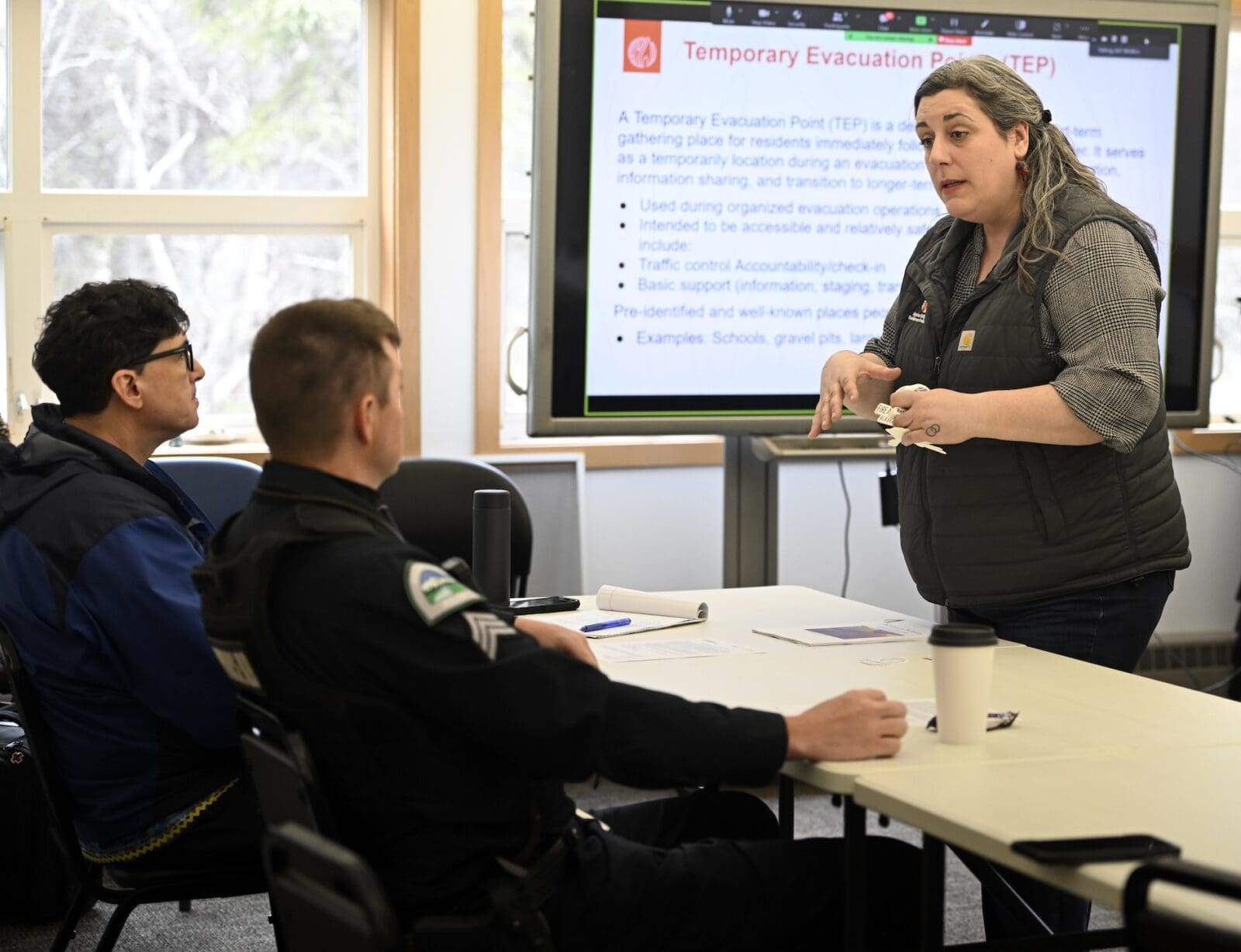
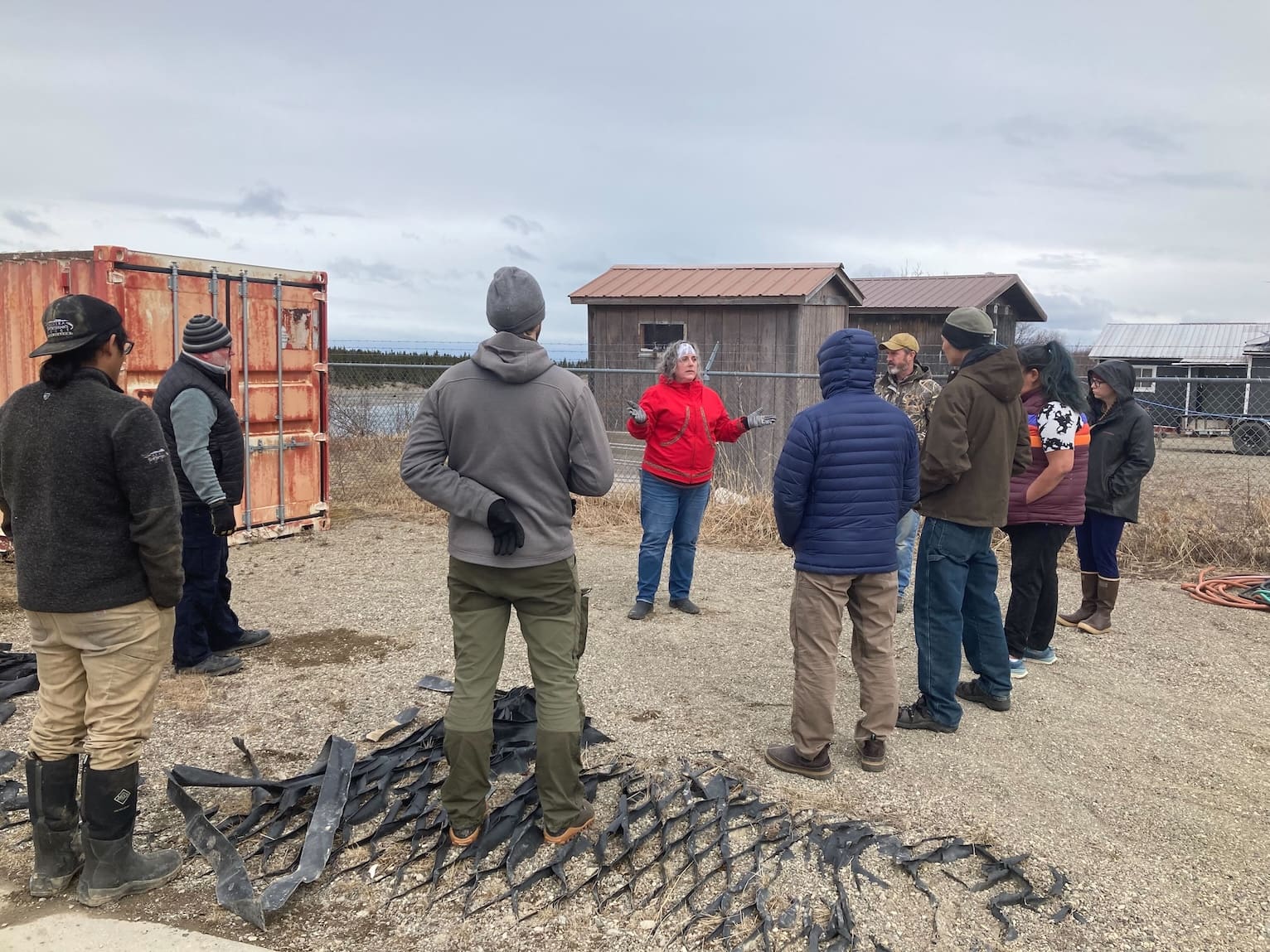
Lisa presenting at a Wildfire preparedness and evacuation planning training in Dillingham. Photo by Misty Nielsen.
MB: Can you tell us about FIRE GAP and what makes its approach innovative?
LAS: Alaska is big and remote. FIRE GAP accepts the fact that in many communities, it could be hours or days before outside help arrives to a fire emergency, if it comes at all. It accepts that local community members have always been and will be their own first responders and looks at the successful ways each community protects itself from fire, then builds a tailored training from there. It’s designed to remove the limitations of Western accreditation programs or certification requirements. Instead of a top-down, one-directional teaching approach, it centers community knowledge and response first, and tailors programming for guardianship, preparedness, and continued education.
As a result, the community gets to make it their own. It’s not a state agency saying, “you have to do it,” and it’s not an outsider saying, “you are not doing it right.” FIRE GAP is adaptable: a community can say, “We don’t need Raven’s Warning (a set of fire prevention children’s books authored by Lisa) because we don’t have young children right now, but we really need more time for our Elders,” or “We don’t have people who’d respond together, so we just need the individual suppression piece.” They pick and choose. We start where they already are.
Since FIRE GAP is tailorable and scalable, I believe funders, agencies and organizations would get behind it once they can see what a community can do with $35,000 or $50,000. It empowers people, reduces losses from infrastructure and wildland fires, and keeps communities safe.
We know this from our FIRE GAP work in Igiugig on Lake Iliamna. When Igiugig faced a real fire in April this year, the community was trained and prepared to respond. The local responders quickly worked together to save an important community building using the tools, equipment and skills from the program. We’ve spoken with some of those who responded and done the math; the community saved nearly half a million dollars because of FIRE GAP.
MB: What excites you about the future of this model?
LAS: An important part of FIRE GAP’s model is the fact that it builds on itself. We teach it in one community, and when we move to the next one, we bring someone from that first community along as a mentor. They help teach, and then go home feeling more confident in their skills. We’ll keep building capacity that way — until someday we’re sending FIRE GAP teams completely made up of community members going out to other communities.
What excites me most is the potential for youth leadership within that growth. Young people can start out co-facilitating the kids’ program, get more involved, learn more, and, when they’re ready, they can teach more pieces of the program. We have 18- and 19-year-olds coming out of high school who are determined to do this work for their own communities — who may not want to go to college, and don’t need to in order to protect the places they’re from. It also gives them a taste of the fire service and potential pathways into making this a seasonal or full-time job if they’re interested.
AVF's Lisa Amaniq Shield speaking during a fire assessment training in Igiugig. Photo by Kenni Psenak.
MB: As fire seasons grow longer and more severe, what keeps you up at night and what gives you hope about rural Alaska’s ability to adapt and protect itself?
LAS: What picks at me is the widespread misunderstanding that our communities already have what they need to protect themselves, and that wildfire is happening somewhere “out there,” away from the communities that are at highest risk. A million to millions of acres burn in Alaska every fire season, and it is easy to lose sight of how many communities are threatened when that happens. A fire is a fire in rural Alaska, no matter if it starts in a house and spreads, or starts as a wildfire that comes into a community. The reality is that communities exist throughout Alaska and most do not have the training to manage an incident. Each community knows they need a way to respond to sudden threats of fire, and they aren’t sitting around twiddling their thumbs — they’re searching for help and funding that, in too many cases, they’re not getting.
What gives me hope is that awareness is beginning to rise and the demand is there. Communities want help. They want to be able to protect their homes and lands, and there are people inside and outside the fire service who want to provide it. If we can uplift the voices and needs of Alaskans, build connections across the state, and bring better access to resources and training, I’m hopeful that we can build greater resilience for communities across Alaska.
Interested in learning more about the work of the Alaska Wildfire Resilience Initiative? Read more about the Initiative here.
Written by Maggie Bryan, Climate and Communications Associate Photos courtesy of Ryan Morse, Lisa Amaniq Shield, Misty Nielsen and Kenni Psenak Published: September 2026
Stay connected.
Sign up for updates on how we’re driving change, building powerful partnerships, and creating opportunities for all Alaskans. You can unsubscribe at any time.
Read our Website Privacy Policy to learn more about how we take care of your information.