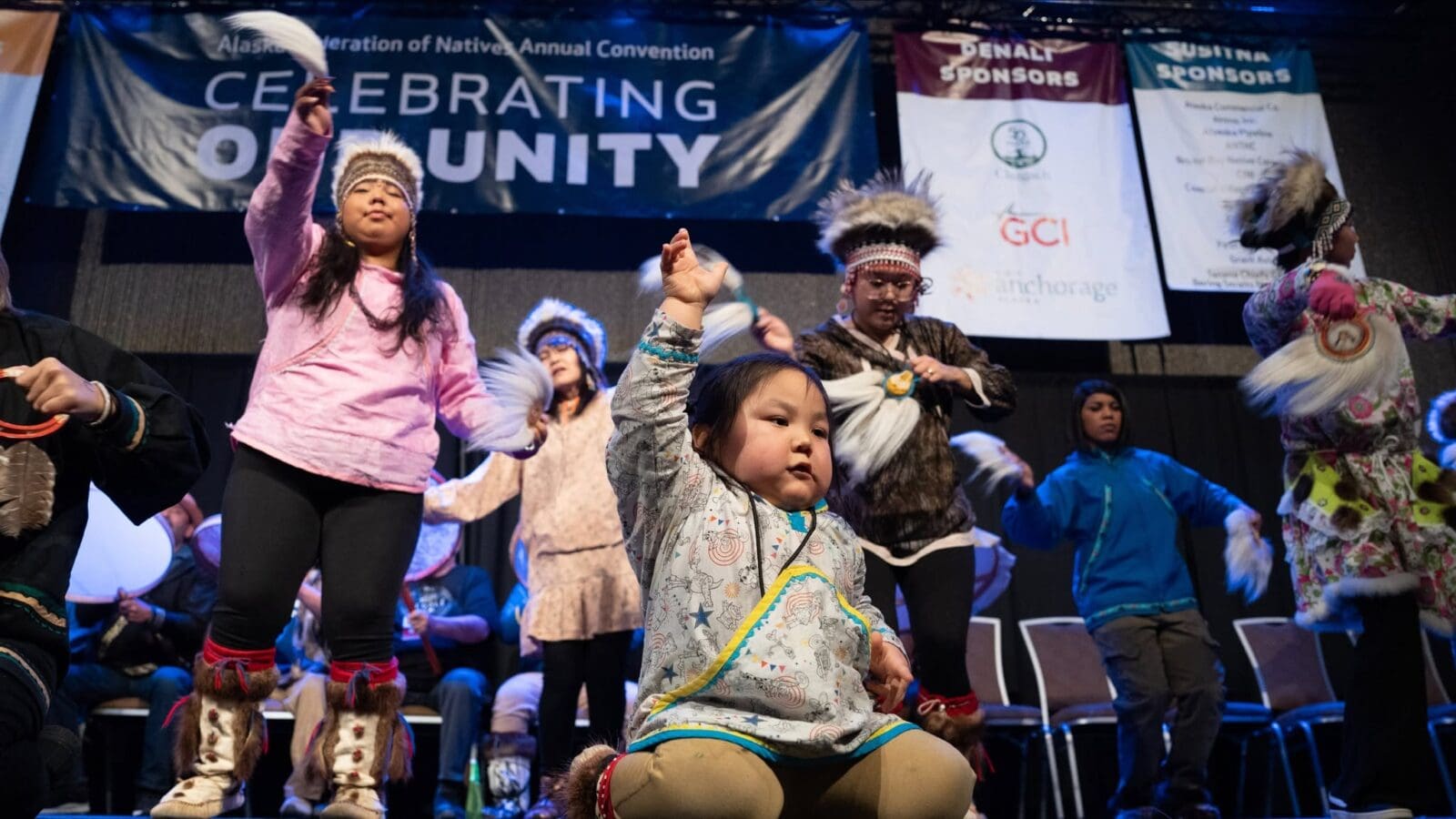
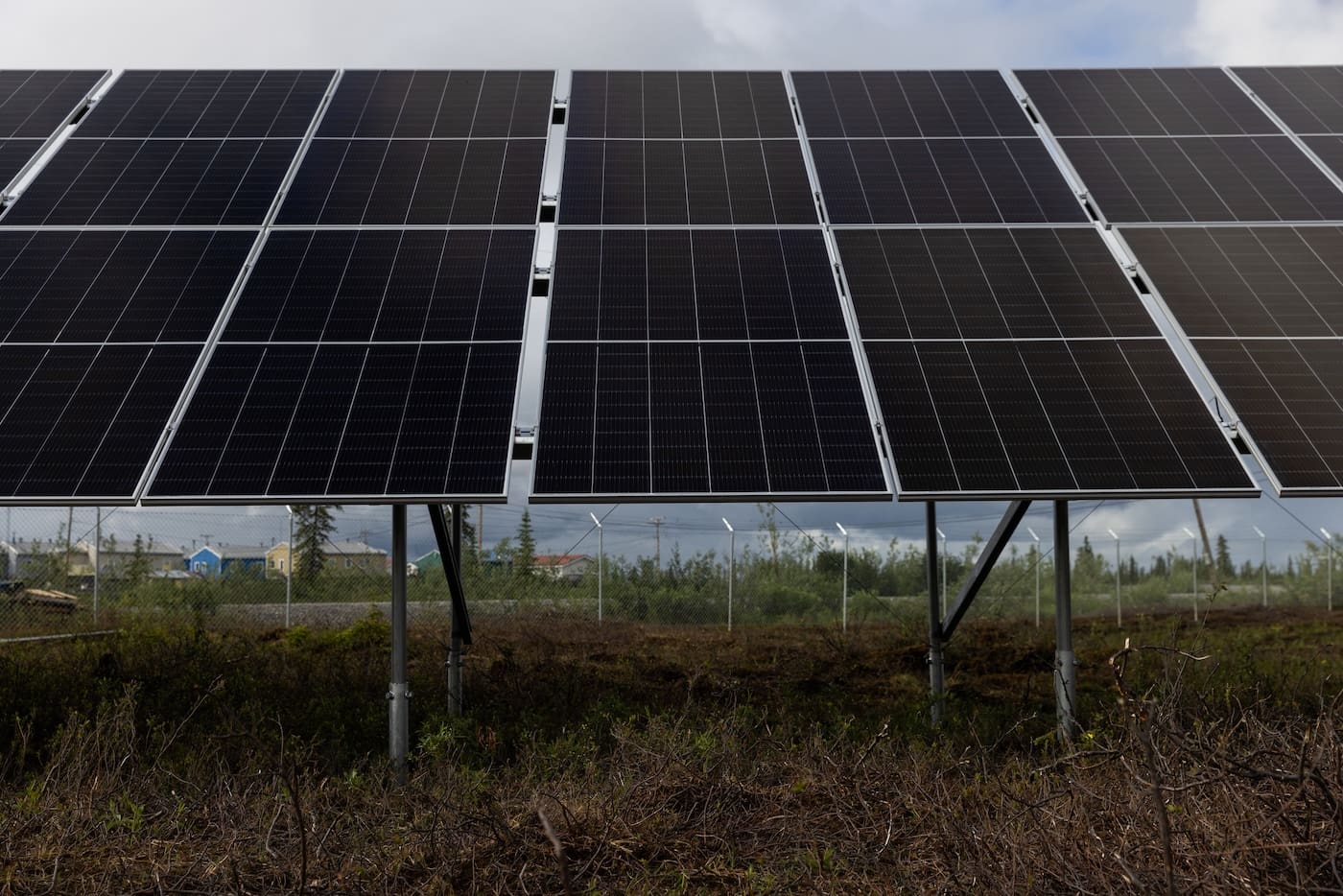
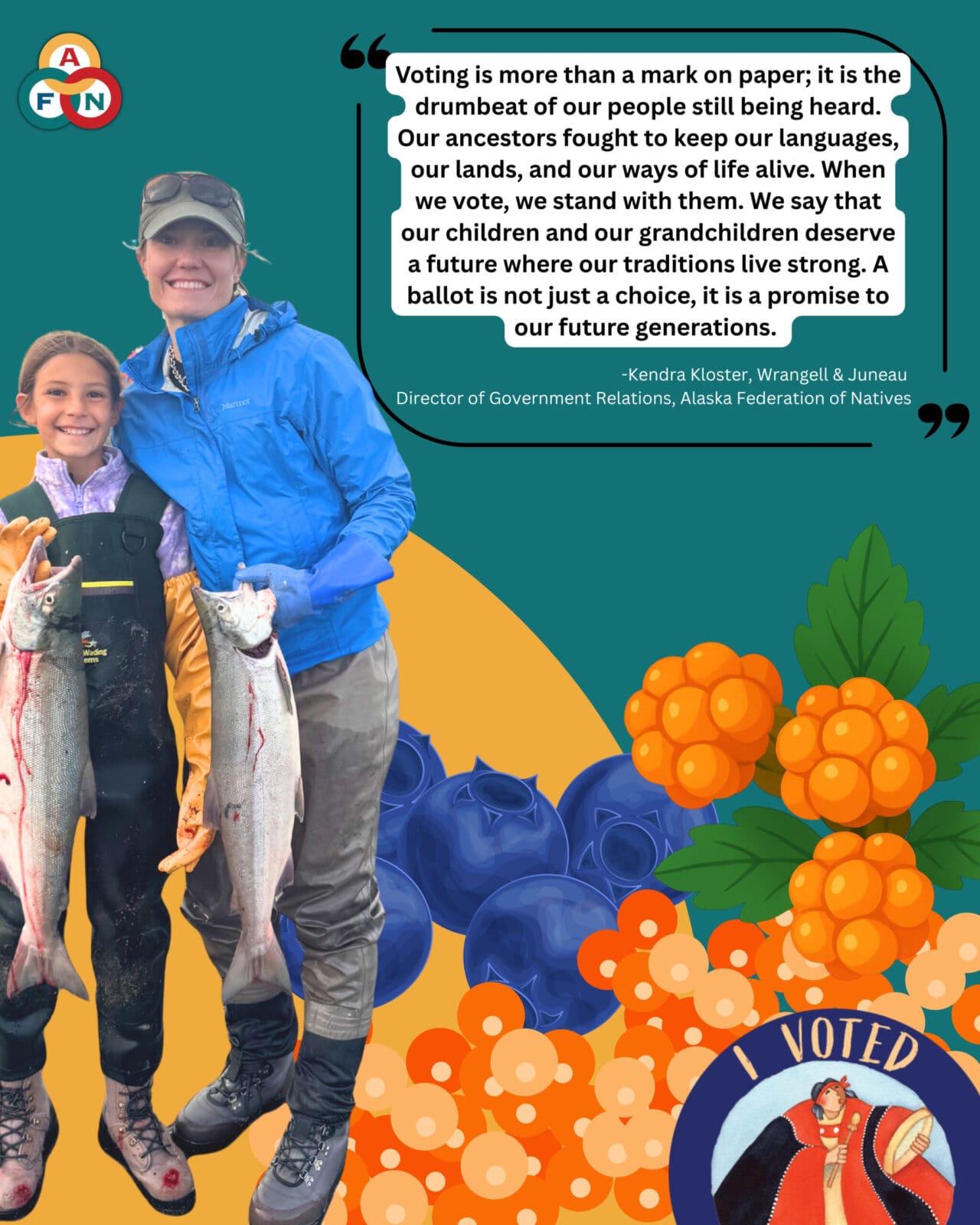
Over the last few years, as rural Alaska’s already-high energy prices have continued to climb, AFN members have passed resolutions focused on clean energy, energy affordability and self-determination. Most of Alaska’s population lives within its railbelt electricity grid, between Fairbanks and the Kenai Peninsula. Everywhere else, communities rely on independent microgrids that are less reliable and more expensive to maintain. Kendra Kloster, AFN’s Director of Government Relations, has worked with partners and community leaders to help share information on the barriers rural Alaskans face when it comes to affordable and reliable energy.
“During my tenure working in the Alaska legislature, I felt there was more emphasis on railbelt and conversation on the gasline, and not enough attention on solutions for affordable energy in rural Alaska, which is where some of the highest energy costs are,” says Kloster. “That really left an impression on me. Now that I’m at AFN, there is an opportunity through the energy resolutions, which are directives from our members, to take more steps to identifying solutions.”
Recognizing that energy issues needed additional capacity at AFN, Kloster approached Alaska Venture Fund, using funding from AVF and separate funding from the Rural Democracy Initiative to create a dual position, Initiatives Director, to support their energy outreach and civic engagement work.
Creating Energy Outreach Capacity
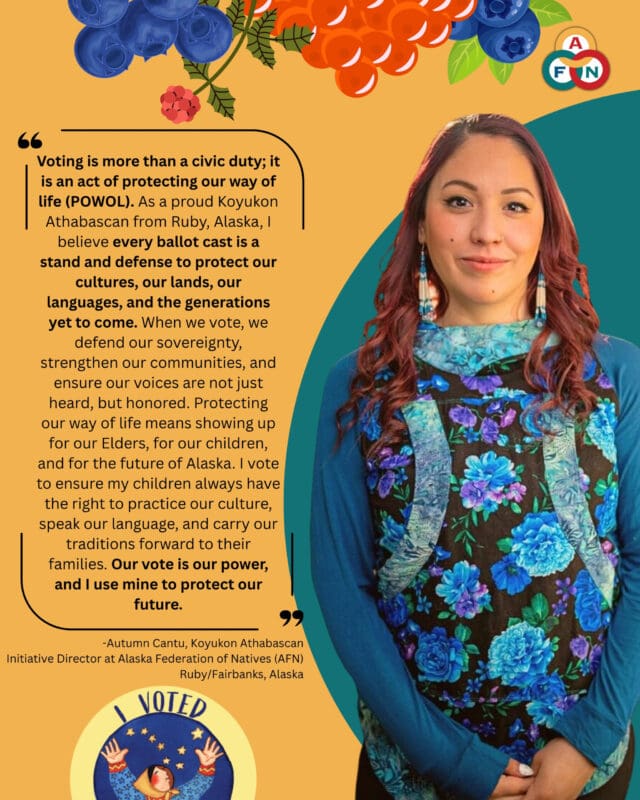
As she recruited for the role, Kloster sought someone with strong organizing and outreach experience. She found that in Autumn Cantu, a longtime collaborator on rural and Indigenous voter outreach and on a Missing and Murdered Indigenous Women working group.
Cantu comes from Ruby, a community of 130 people accessible only by plane, boat or snowmachine. The closest large town is Fairbanks, 230 miles away by air, where Cantu now lives. Growing up, she watched isolation breed voter apathy, but she also saw what could change it. “I grew up in a community that didn’t believe in the power of voting. I got used to thinking, ‘Why vote? It’s not really going to affect anything,'” Cantu says. “What ultimately inspired me to get involved was seeing community members start to talk about issues, leaders get more involved, and partnerships be created.”
A social worker by training, Cantu is driven by listening to what communities need and building programs around it. That’s what drew her to energy work. “In Fairbanks, this winter we had three months of 40 below temperatures. When Kendra asked me if I wanted to do more energy work, I said yes. This is the year to do it.”
In the months since starting at AFN, Cantu approached this role through the lens of how AFN can best be a good partner and collaborator. This included listening and responding to the needs of people and organizations across the state, working with community partners to draft rural energy plans, assisting local leaders in efforts to draft op-eds sharing their perspectives and co-hosting legislative informational hearings on energy. Cantu is also working with partners to form a rural energy task force that will make recommendations to state and federal agencies. Working at all scales means that AFN is well-connected from the community level to federal decision makers. That reach allows them to better support rural energy work wherever it is needed.
"First, I met with a lot of different agencies and community members and took a step back to listen, and identify where it made the most sense for AFN to fit into this space,” says Cantu. “What we heard from most people was that they wanted more action-based steps: op-eds, policy advocacy and a task force that wasn't just doing check-ins or updates but actually had boots on the ground to ensure that our communities are going to be okay this winter." – Autumn Cantu, Initiatives Director, Alaska Federation of Natives
Getting Out the Native Vote
Alaska Native people make up roughly a fifth of Alaska’s population, but cast a much smaller share of the vote. It is this gap that the other half of Cantu’s job is built to close. AFN partners with First Alaskans Institute and Cook Inlet Tribal Council on Get Out the Native Vote, and also houses the Native Vote Initiative, which unites Alaska Native Tribes, corporations, non-profits and regional native vote coalitions across the state. This year, Cantu has built regional voting toolkits and candidate questionnaires designed to get communities the information they need ahead of election season.
For both Kloster and Cantu, the goal of both the energy and voting work is to create a unified voice and robust partnerships capable of supporting the generations to come. Carrying out that goal requires building on the existing partnerships that AFN has created, and continuing to listen to the communities it serves.
Written by Maggie Bryan, Climate and Communications Associate
Photos provided by Alaska Federation of Natives and Nathaniel Wilder
Published: July 2026