At the beginning of May, winter still lingered in the mountains above the Chilkat Valley, but the valley was already coming alive with migrating waterfowl, whales, sea lions and large congregations of bald eagles. The winds that carried silt from the banks of the Chilkat River through the communities of Haines and Klukwan also carried a sense of anticipation, as community members readied for the hooligan run (saak in Tlingit).
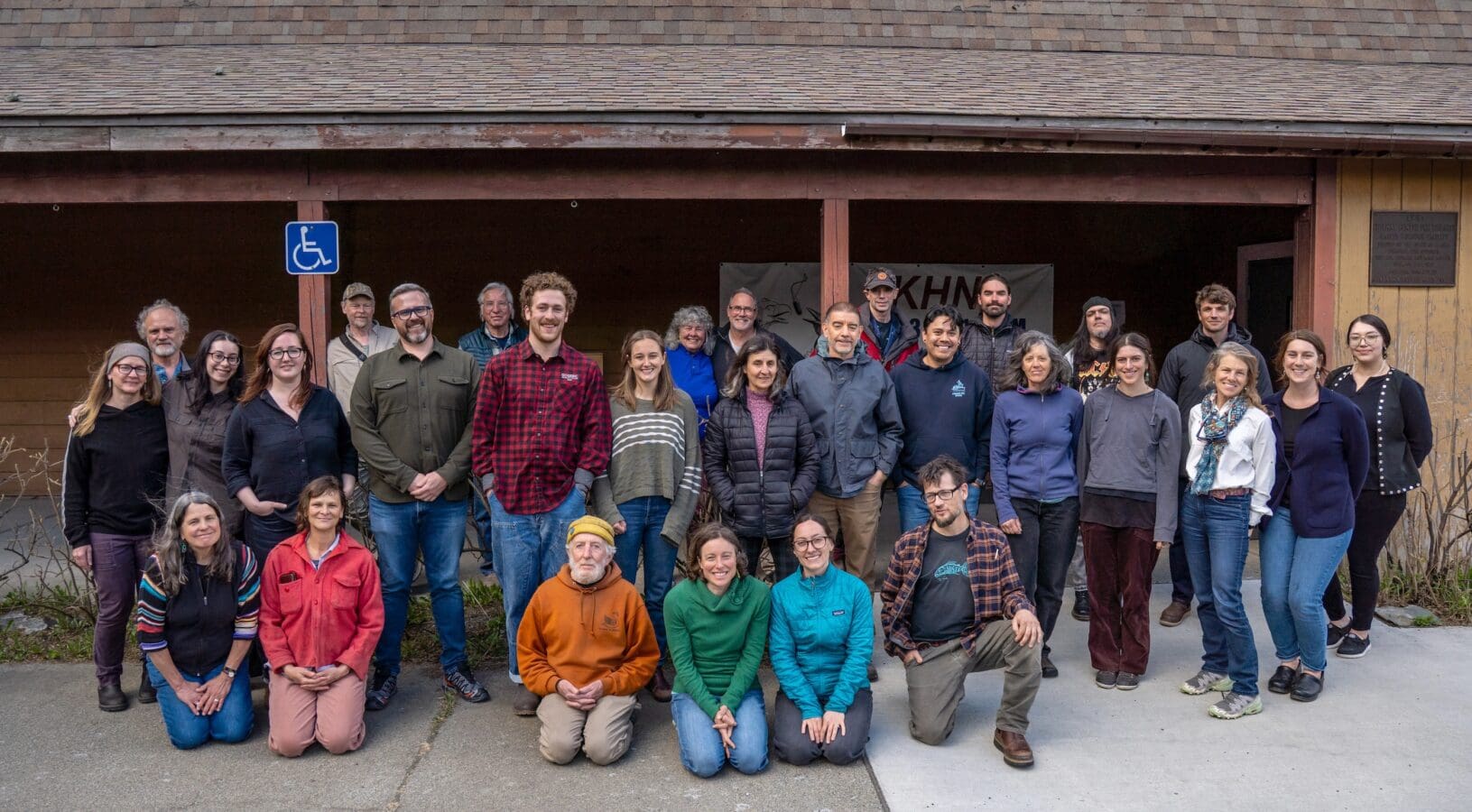
Amid this transition, Tribes, scientists, researchers, educators, conservation groups and seasonal guides all convened in Haines (Deishu) for the first-ever Chilkat Valley Biodiversity Forum — three days of presentations, small group discussions, shared meals and time on the lands and water, with the aim of building a shared understanding of the region’s biodiversity. The timing was deliberate; the forum was held when the valley could make its own case.
Kimberly Strong, president of Chilkat Indian Village (Klukwan), describes this event as a marrying of Indigenous knowledge with Western science.
“When we meet with state and federal government agencies, their decisions are based on western science. Our Indigenous perspectives are based on generational knowledge and practices of living off the land. It would be beneficial if traditional Indigenous-led knowledge could work in unison with Western Science, sharing equally as partners. Working collaboratively together, we can create shared understandings of our natural world, ensuring an equitable and abundant future for our future generations and the land that sustains us.”
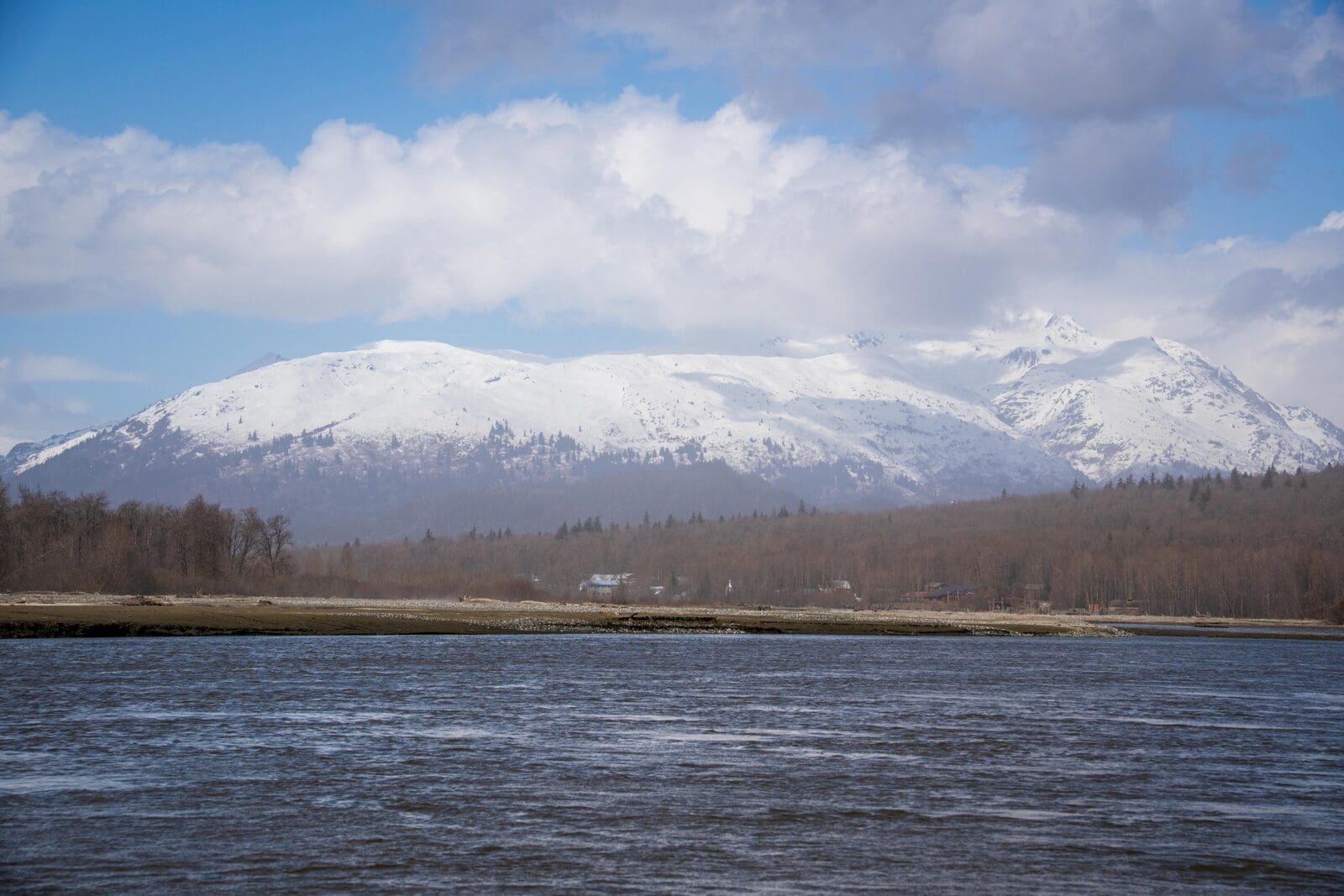
The village of Klukwan seen from the Chilkat River.
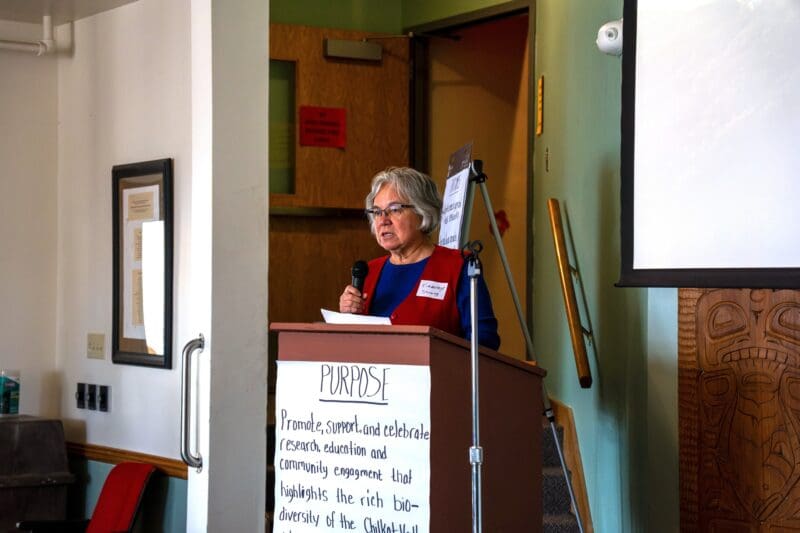
President Kimberly Strong of the Chilkat Indian Village Klukwan speaking at the forum.
The Forum grew from a suggestion from Kairos Philanthropy, with funding matched by Ecotrust and facilitated through the Alaska Venture Fund. Dr. Natalie Dawson and Shawna Hotch served on the planning committee alongside community members, stepping away from their organizational roles to encourage community ownership and a diversity of perspectives. They are joined below by AVF colleague Bill Kane, reflecting on their experience of the Forum.
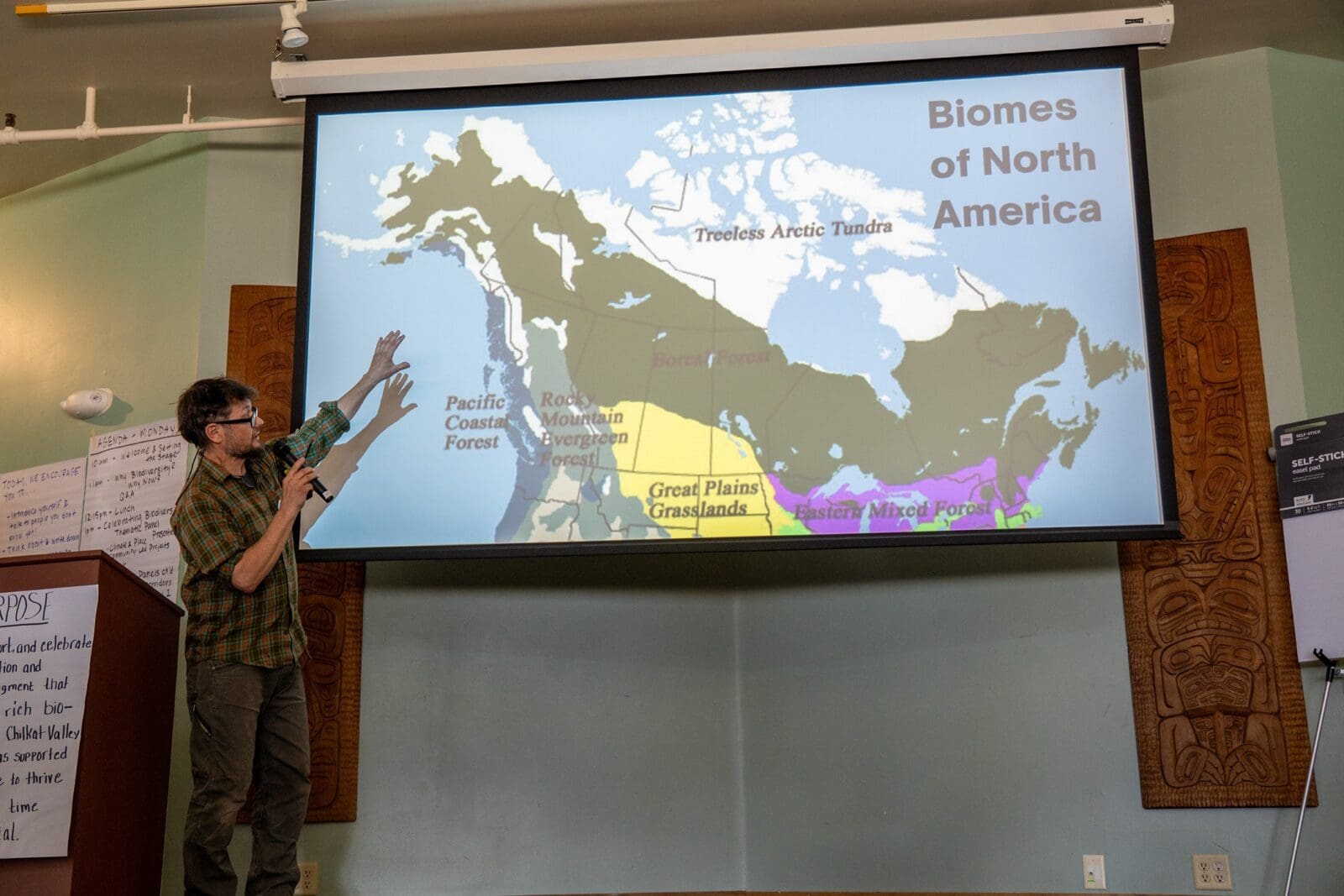
Local naturalist Nicholas Szatkowski presenting during the forum.
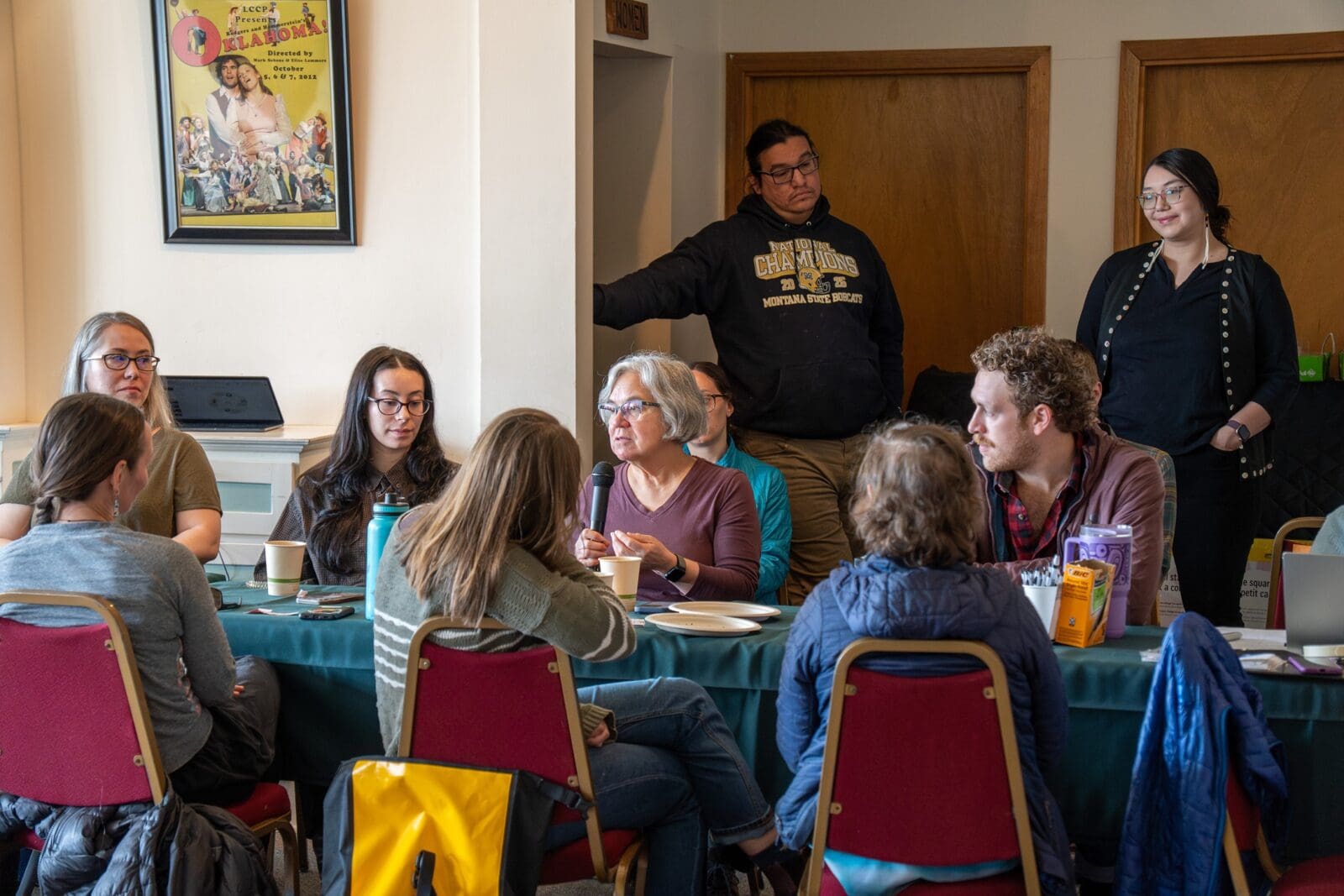
Kimberly Strong (Chilkat Indian Village Tribal Council President) speaks to the hall.
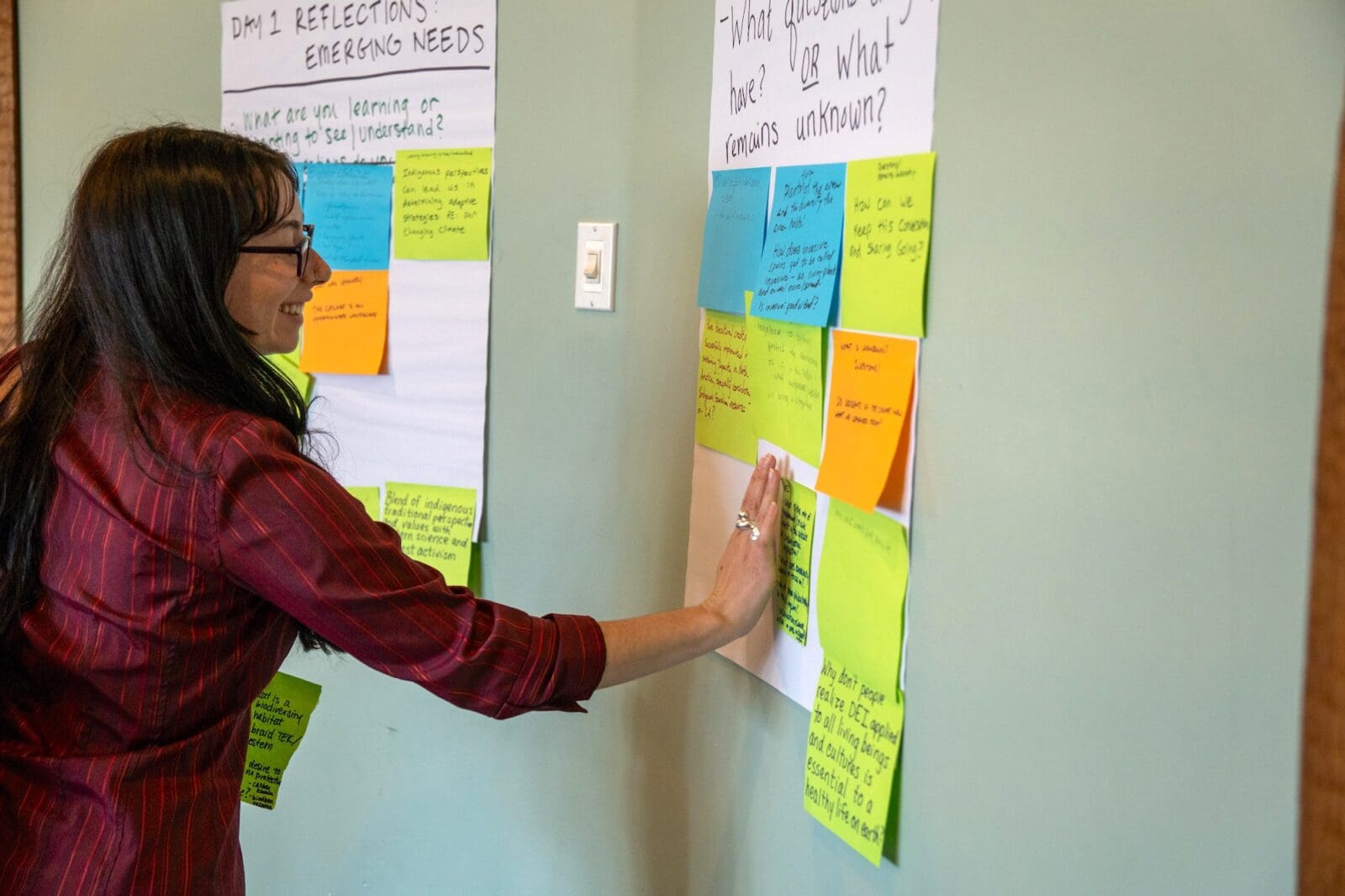
Tatum Askew adds her reflections to the board at the end of the first day.
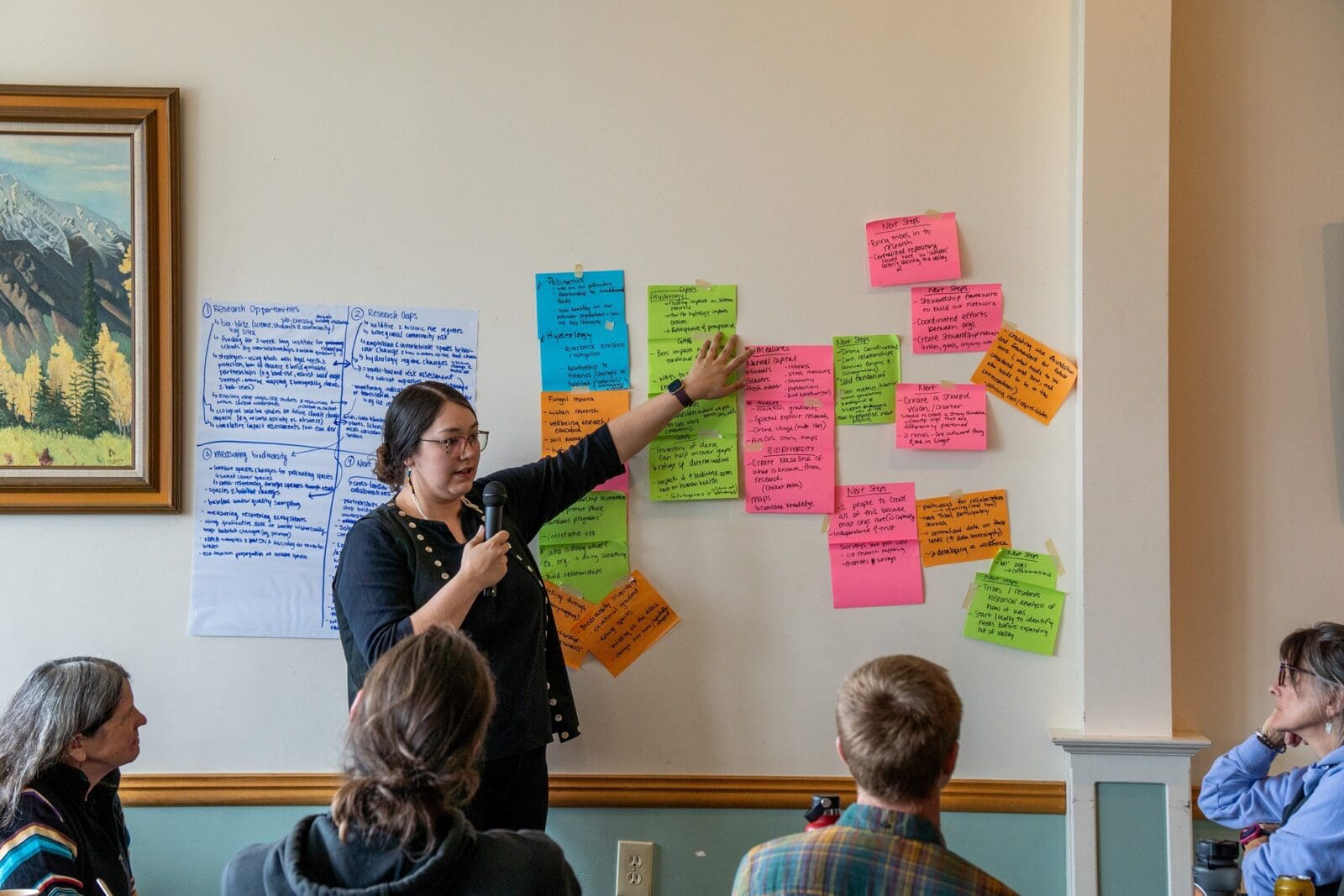
Shawna Hotch shares her group's reflections on the final day of the forum.
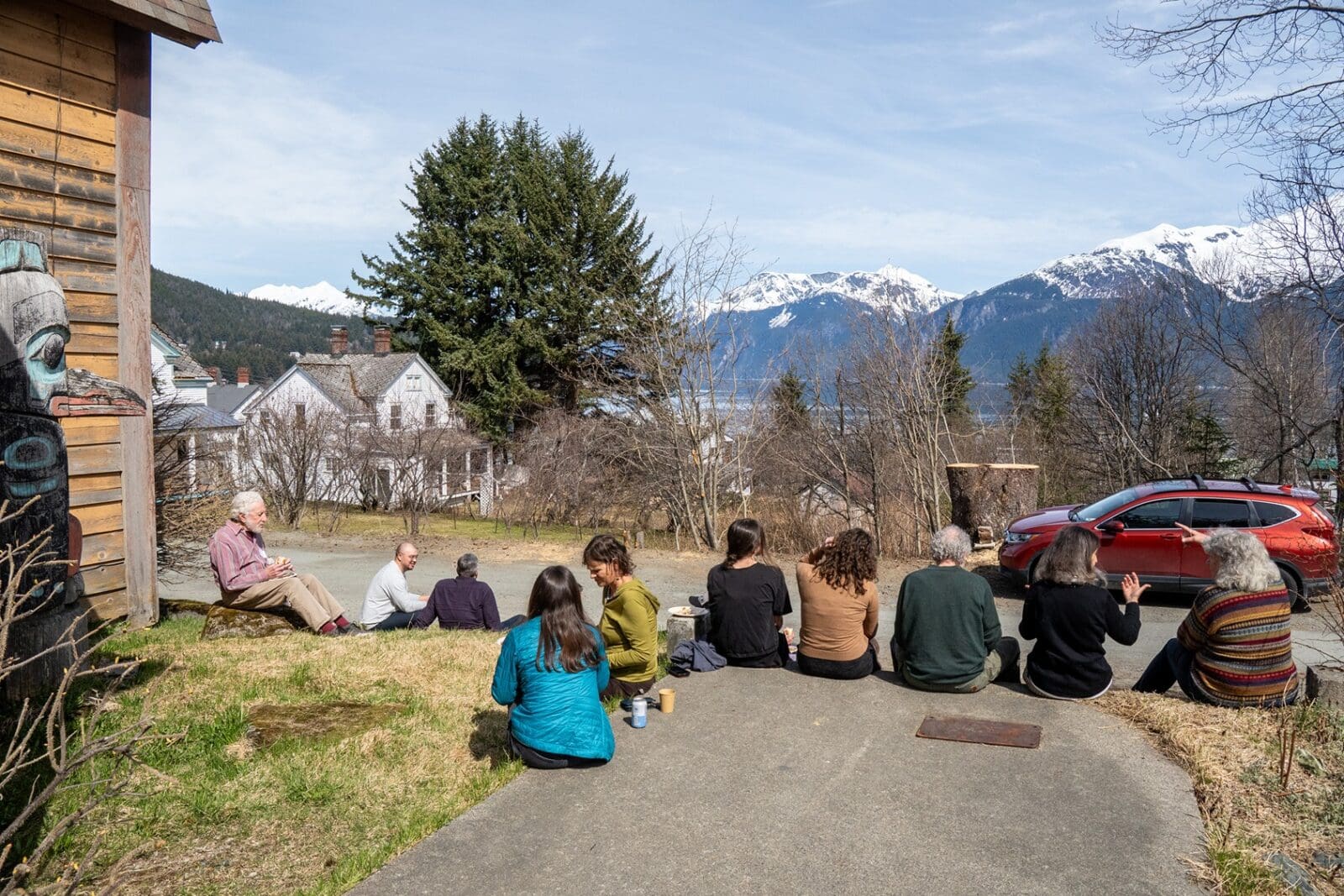
Participants take lunch outside the Chilkat Center for the Arts.
Prepared by Lauren McPhun, the food served at the Biodiversity Forum was made locally using ingredients harvested from the valley.
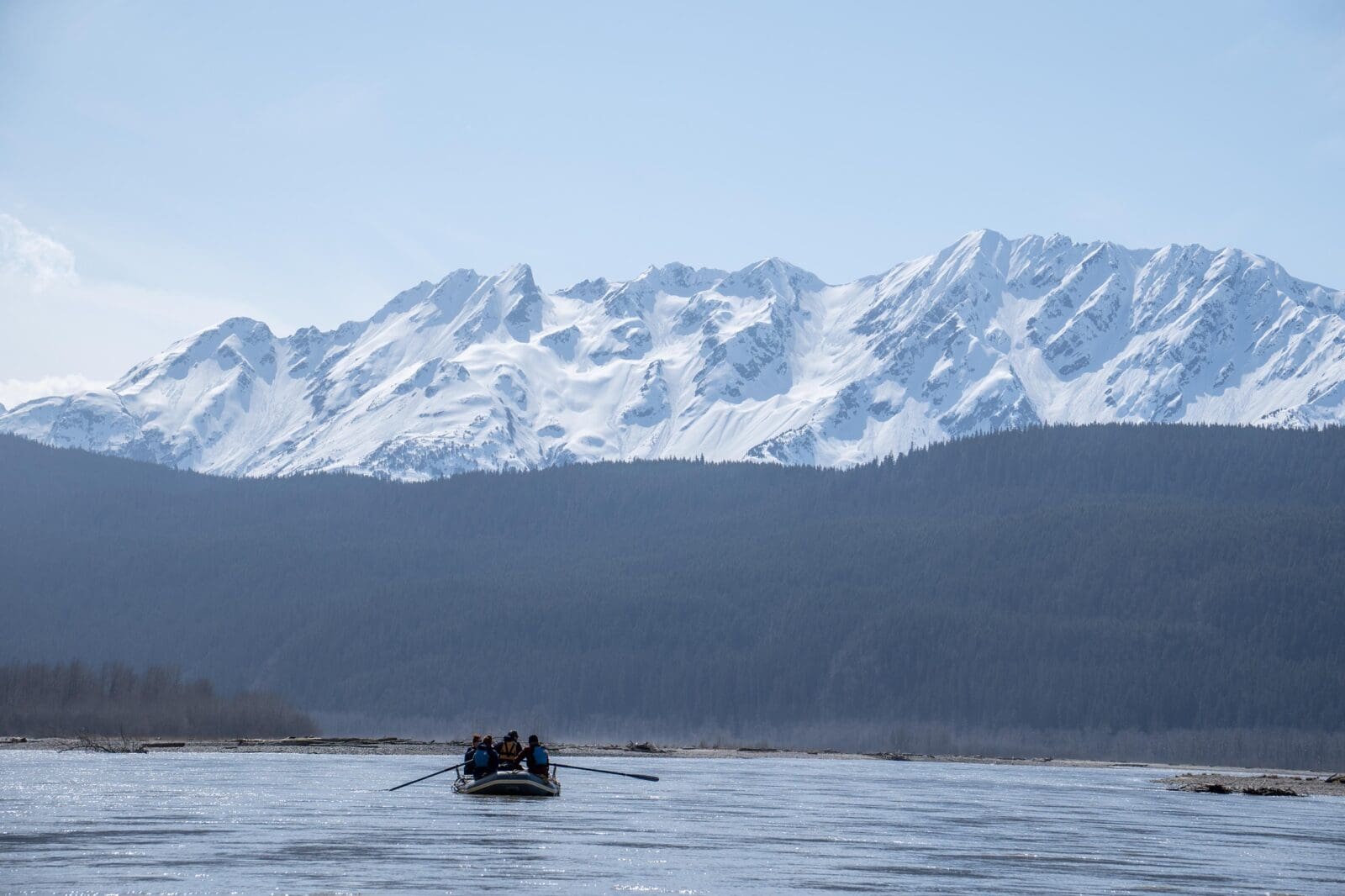
Forum participants experiencing the Chilkat River on a rafting learning journey.
A Shared Vision Shaped by Trust
Shawna Hotch, AVF Indigenous Networks Coordinator
As a member of the Jilkáat Kwáan from Klukwan and a member of the planning committee, the Chilkat Biodiversity Forum was meaningful because it created an opportunity to experience the Valley through both Indigenous and scientific perspectives. The Tlingit values of yáa at wooné (respect for all things) and everything has yakgwahéiyagu (spirit) were present throughout the forum each day, framing the valley not only as a place of rich biodiversity, but as a living system with deep roots and relationships. Every decision that went into the forum was intentional, from the timing of the season to the catering using locally harvested food, centering how crucial these natural systems are to our traditional way of life.
Throughout the forum, trust shaped every conversation. This gathering created the space to start building that trust between the Tribes, researchers and partners working in the Chilkat Valley. I saw moments of realization from scientists as they reflected on the importance of including Tribes throughout the research process, not just after decisions have already been made or funding has been awarded. I saw relationships and connections being strengthened. As a younger Tribal leader, it was especially moving seeing Tribal administrators and presidents from both the Chilkat Indian Village and the Chilkoot Indian Association sitting together in the same room, reinforcing their commitment to our way of life in the Chilkat Valley. I left the Forum encouraged that when trust is present, people are more open to listening, learning and shifting how they work together.
On the second day, participants went on guided journeys into the valley to give everyone the chance to ground their knowledge in the Chilkat directly. For me, it was the first time I got to experience being out on the Chilkat River. Launching onto the water right in front of Klukwan, my home, I knew that I would forever remember this gift.
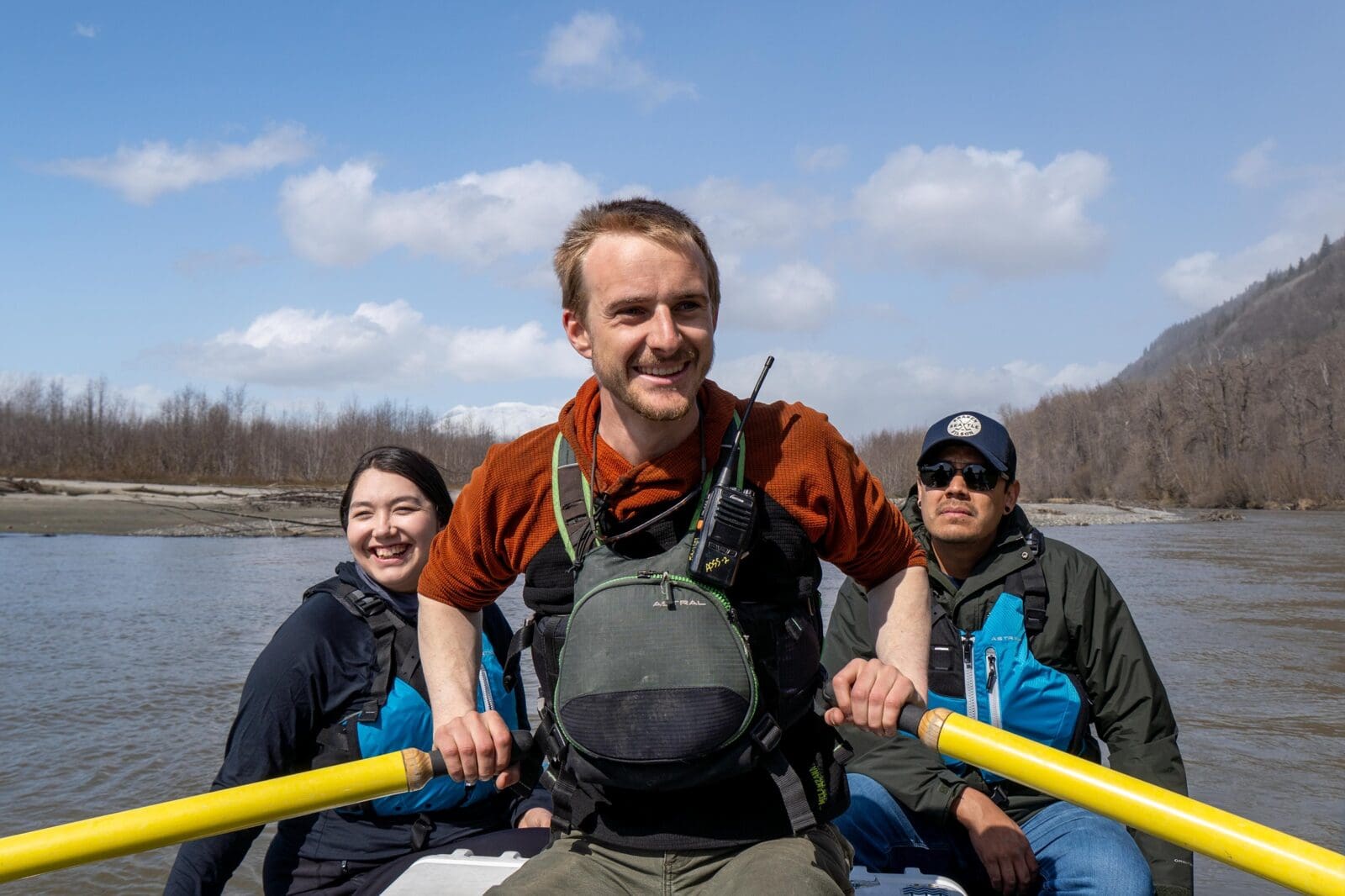
Shawna Hotch, Nate Arrants and Donavan Jackson on the Chilkat River.
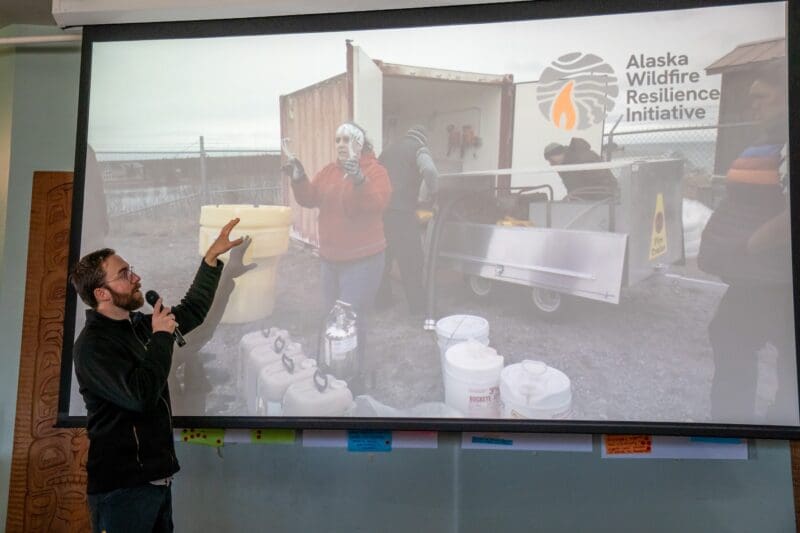
Bill Kane presenting at the forum.
Cultivating Relationships in Community and Place
Bill Kane, Iliamna Sustainable Communities Program Manager
I’m so grateful to have been invited to the Chilkat Valley to learn from and support my colleagues and the lands, waters and communities they work on behalf of. Though I have had the chance to visit the valley previously, participating in the inaugural Chilkat Biodiversity Forum—combined with a visit to Klukwan with Shawna—provided me with a completely fresh perspective and deeper appreciation for this place.
Over three days, Tribal leaders, invested community members and academic researchers all shared their knowledge of this landscape and their passion for how truly ecologically unique it is. Through presentations and discussions, we explored novel collaborative solutions and ways to support shared biodiversity goals, including “Conservation Finance”, ways of putting private funding to work for ecosystem goals. Experiential “Learning Journeys” gave us time out on the land and water together. This was a highlight—these types of liminal periods are often where the magic happens, and it was evident that careful thought was made by the organizers to make this happen. The less structured time gave us the much-needed space to further our understanding of the region, to share our expertise, passions and curiosities with each other, and to cultivate new friendships and opportunities for collaboration.
I’m excited to see what comes next.
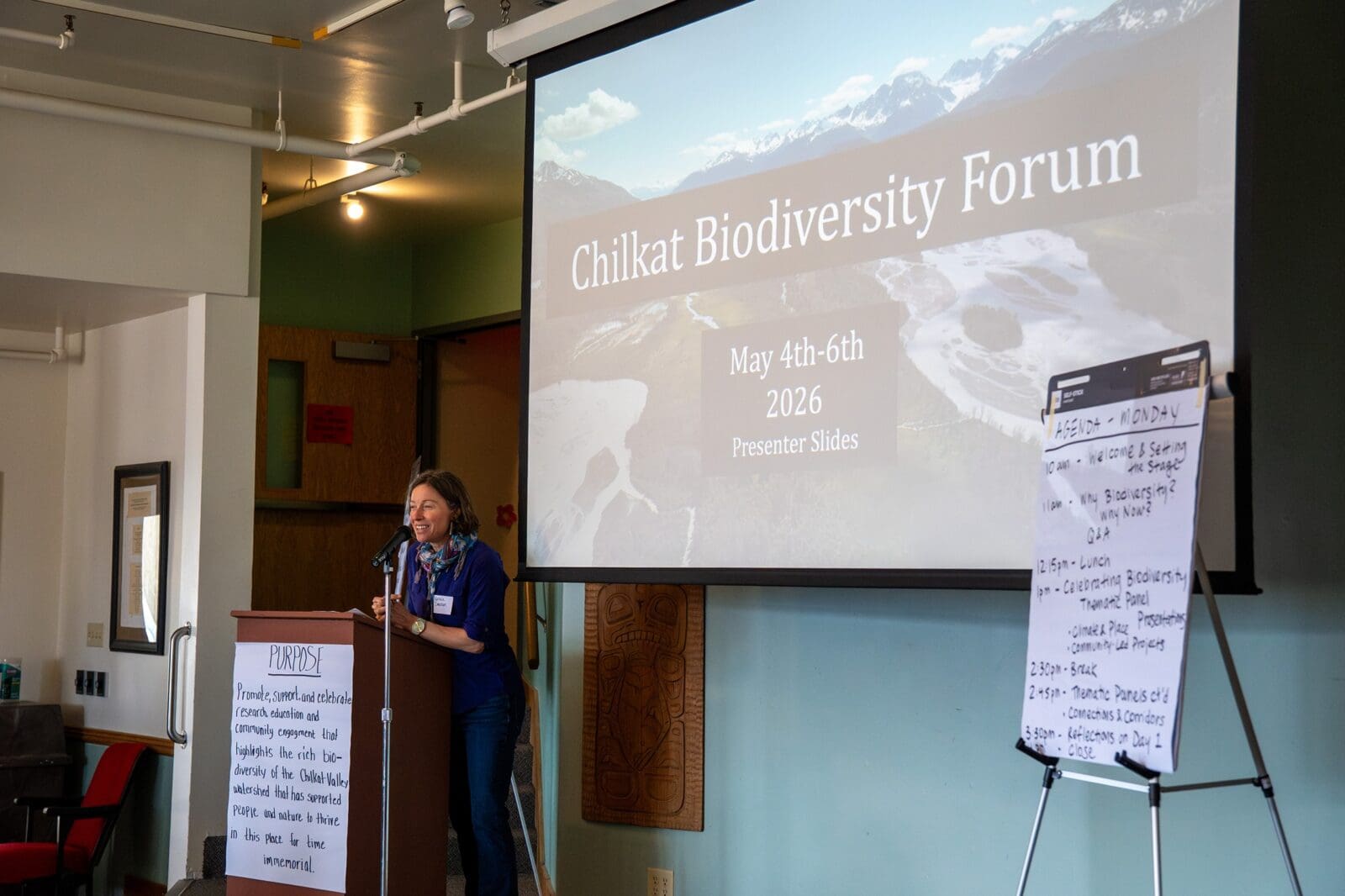
Natalie Dawson speakng at the opening of the forum.
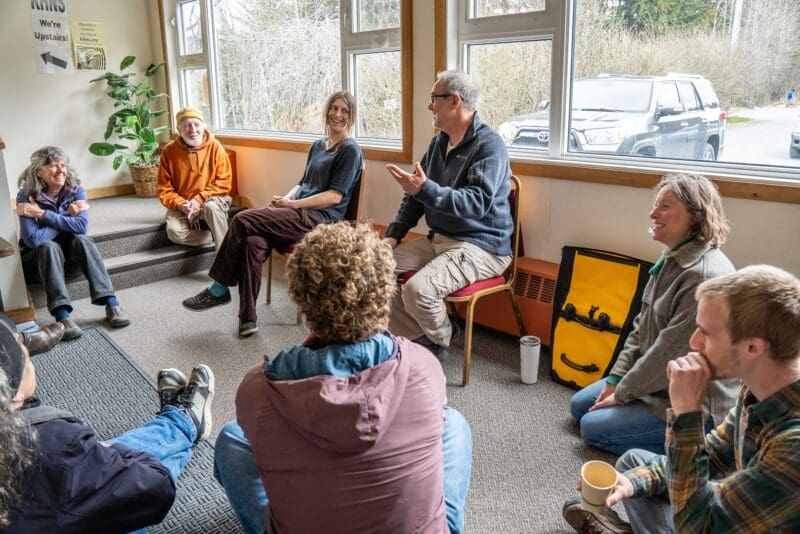
Participants reflect in a small group during the last day.
Looking Ahead
Natalie Dawson, AVF Director of Strategic Partnerships
On our final day of the forum, we reflected on next steps and how we continue the momentum started here. We heard about creating more opportunities for partnerships to unfold in an organic way, with events like this that help build trust. The Chilkat Valley is a small rural community in a large, dynamic landscape. Here, we all take time to be outside, to raise children, build homes, gather food and practice culture—we recognize that each of us will have to commit time and energy to nurture the forum’s future. Looking ahead, we will be welcoming new steering committee members, sharing feedback on this year’s forum and exploring the many different ways to carry this forward.
As part of initiating the Chilkat Biodiversity Forum, Kairos Philanthropy has committed funding for a small grants program. Small grants in the $5-$10K range will be available through calls for proposals. The funding is intended to advance the mission and outcomes of the forum by supporting work that deepens collective understanding of the biodiversity within the Chilkat Valley. This work is already underway, with current grants supporting the Chilkat Valley Lynx Project and a region-wide lichen survey.
This small grants program supports Alaska Venture Fund’s role in communities where we organize and uplift in order to empower. In this case, we’re supporting the creation, development and delivery of a shared space to celebrate what we know to be true: the natural and ecological abundance that holds us, nourishes us and feeds the rivers for our future.
Written by Shawna Hotch, Bill Kane and Natalie Dawson with Ryan Morse Photos and video by Ryan Morse, Creative and Digital Communications Specialist
Published: July 2026
Stay connected.
Sign up for updates on how we’re driving change, building powerful partnerships, and creating opportunities for all Alaskans. You can unsubscribe at any time.
Read our Website Privacy Policy to learn more about how we take care of your information.